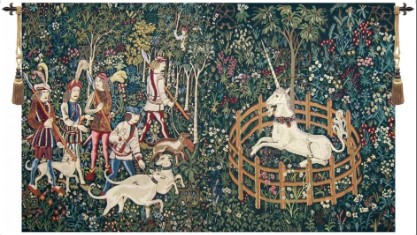
The medieval unicorn tapestry has long fascinated historians, art lovers, and cultural researchers due to its intricate storytelling and deep symbolic meaning woven into fabric. These medieval unicorn tapestries, often associated with late medieval European craftsmanship, reflect a blend of mythology, religious symbolism, and aristocratic life. Among the most studied examples are the famous unicorn-themed series believed to have originated in the late 15th or early 16th century and now preserved in institutions such as The Met Cloisters in New York. These works depict the legendary unicorn in scenes of pursuit, capture, and enclosure, offering insight into how medieval societies interpreted purity, nature, and power through textile art.
Origins and Historical Background
The origins of unicorn-themed tapestries trace back to the flourishing textile workshops of medieval Europe, particularly in regions such as Flanders and France. These workshops produced elaborate woven artworks commissioned by nobility and wealthy patrons. The imagery in a medieval tapestry was not merely decorative but served as a narrative medium, often telling stories of mythological creatures, biblical scenes, or courtly life.
One of the most recognized series, often referred to as the Unicorn Tapestries, is believed to have been produced between 1495 and 1505. These works depict hunting scenes where noble figures pursue a unicorn through forests and enclosed gardens. The unicorn’s presence in these scenes reflects medieval fascination with mythical creatures and their association with virtue and rarity.
Symbolism and Cultural Meaning
The symbolism embedded in a unicorn tapestry is rich and multi-layered. In medieval European thought, the unicorn was often associated with purity, innocence, and spiritual power. It was believed that only a virgin could tame the unicorn, making it a symbol of chastity and divine connection in Christian interpretations.
In hunting scenes, the unicorn’s capture is not always portrayed as violent. Instead, it is often shown resting peacefully or willingly surrendering in an enclosed garden. This imagery reflects the idea of harmony between nature and the divine. The unicorn also became a metaphor for Christ in medieval Christian iconography, representing sacrifice and resurrection.
Such interpretations show how the medieval unicorn tapestry functioned as more than decorative art; it was a visual language communicating moral, religious, and philosophical ideas to viewers of the time.
Artistic Techniques and Weaving Tradition
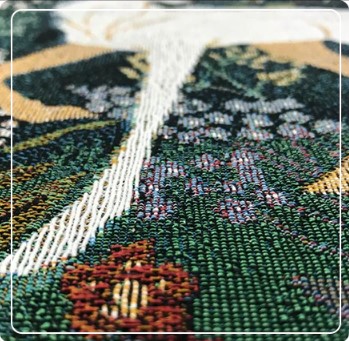
The creation of a medieval tapestry required exceptional skill and time. Weavers used techniques such as warp-faced weaving on vertical looms, often incorporating wool, silk, and even metallic threads. The level of detail achieved in these works demonstrates the advanced craftsmanship of medieval artisans.
Color palettes were carefully selected using natural dyes derived from plants, minerals, and insects. Scenes were designed in “cartoon” sketches by artists and then translated into woven form by skilled artisans. The complexity of layering figures, landscapes, and symbolic elements made each tapestry a labor-intensive masterpiece.
The durability of these works is another reason many have survived centuries. Unlike frescoes or paintings, tapestries could be rolled, transported, and displayed in different residences, making them both portable and prestigious art forms.
Modern Relevance and Interior Design Use
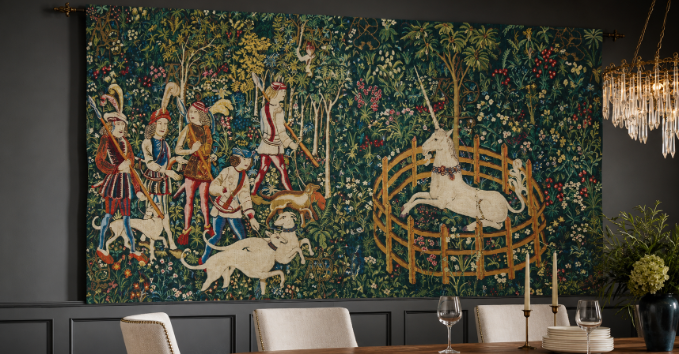
Today, the legacy of medieval textile art continues to influence design, storytelling, and cultural appreciation. The visual appeal of a tapestry wall decor piece inspired by unicorn mythology remains strong in contemporary interiors. These designs are often used to create focal points in homes, blending historical artistry with modern aesthetics.
Modern reproductions allow people to appreciate medieval craftsmanship without requiring access to museum collections. They bring a sense of historical depth into living spaces while preserving the storytelling tradition of woven art. The continued popularity of unicorn-themed designs also reflects enduring fascination with mythological symbolism and fantasy imagery.
Conclusion
The medieval unicorn tapestry remains one of the most enduring examples of storytelling through textile art, combining mythology, symbolism, and craftsmanship into a single visual narrative. From its origins in medieval workshops to its interpretation in modern interior design, it continues to capture attention for both its beauty and meaning. Even today, its influence persists in decorative traditions and tapestry wall decor, bridging the past with contemporary aesthetic expression. Exploring the layers of a unicorn tapestry and a medieval tapestry reveals how deeply art was intertwined with cultural values and beliefs.



Most Commented Posts