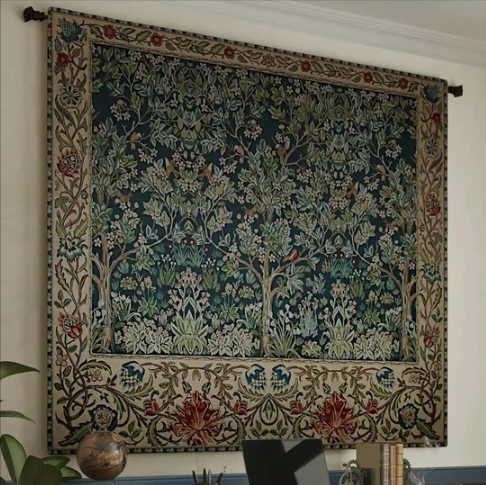
For centuries, vintage tapestries have served as more than decorative fabrics; they were visual storytellers, status symbols, and artistic treasures that carried culture through generations. From medieval castles to modern homes, their enduring appeal lies in their ability to blend history with beauty. Today, these intricate textiles are experiencing a remarkable revival, not only as traditional décor but also as contemporary statement pieces.
Origins of Medieval Tapestries
Medieval Europe marked the golden age of tapestry weaving. Emerging as early as the 12th century, these textiles were handwoven using wool, silk, and sometimes gold threads. Unlike paintings, which were confined to wood or canvas, tapestries were portable art. Nobles and royalty commissioned them to illustrate battles, religious tales, or scenes of courtly life. Hanging a tapestry in a great hall transformed cold stone walls into vibrant storytelling canvases, while also serving a practical purpose, insulating rooms from drafts.
The most famous examples, like the Bayeux Tapestry, depict not only historical events but also the craftsmanship and symbolism of their times. These works became visual archives of history, offering us insight into how people of the medieval period viewed their world.
Symbolism and Cultural Significance
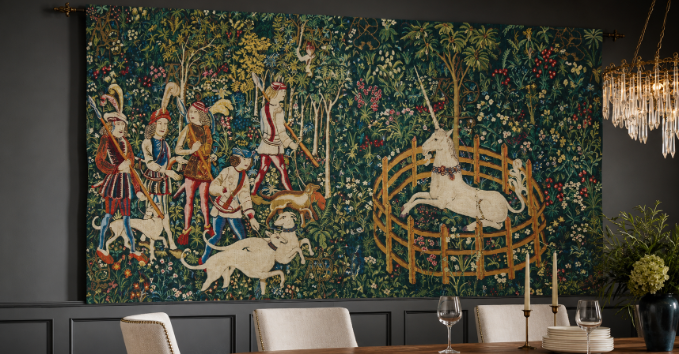
Tapestries were often created with layers of meaning. A hunting scene, for example, was not just a depiction of sport but a symbol of power, nobility, and dominion over nature. Religious themes, too, were prevalent, weaving together morality tales and biblical imagery to instruct and inspire. The painstaking detail in each stitch reflected not only the skill of the artisans but also the wealth and prestige of those who owned them.
The Decline and Rediscovery
With the rise of industrialisation, tapestry weaving began to decline. Machine-made textiles replaced labour-intensive handwoven works, and the once-vibrant art form became reserved for museums and collectors. Yet, as with many aspects of design history, appreciation for the artistry of vintage tapestries never truly disappeared. By the 19th and 20th centuries, the Arts and Crafts movement and later interior design trends sparked renewed interest in these works. Designers and homeowners began to rediscover their timeless appeal.
Tapestry Revival in Modern Décor
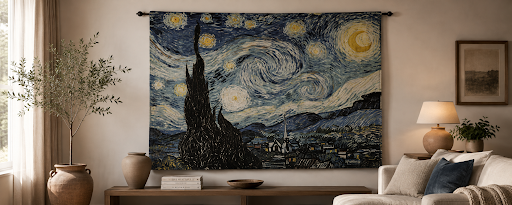
Today, tapestries are no longer confined to castles or estates. Their comeback has been fuelled by a growing interest in blending history with modern living spaces. A tapestry wall hanging instantly transforms an interior, adding depth, warmth, and sophistication. Whether hung in a living room, bedroom, or entryway, these textiles create a striking focal point that paintings or prints often cannot match.
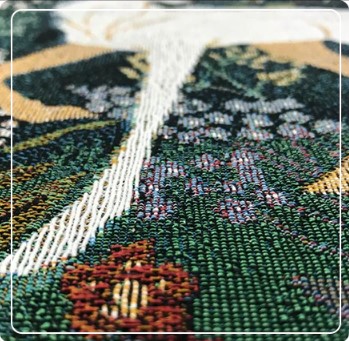
For those with larger spaces, a large tapestry can anchor the entire aesthetic of a room. Rich in texture and design, these pieces are versatile, equally suited to minimalist, bohemian, or classic interiors. Meanwhile, smaller tapestry wall hangings provide opportunities for layering, allowing people to experiment with colour, history, and storytelling in more intimate spaces.
Why Vintage-Inspired Tapestries Matter Today
In a world dominated by mass-produced décor, choosing vintage-inspired textiles is a way of reclaiming individuality and heritage. They bring with them a sense of history, craftsmanship, and intentionality. Just as medieval nobles displayed their power through these works, modern homeowners use them to express taste, identity, and an appreciation for artistry that transcends time.
Conclusion
The story of vintage tapestries is one of endurance, an art form that has weathered centuries, adapted to changing tastes, and found new relevance in today’s homes. From grand castles to cosy apartments, their versatility makes them timeless additions to any interior. Whether you choose a delicate tapestry wall hanging or invest in a large tapestry as the centrepiece of your décor, you’re not just decorating a space; you’re reviving a centuries-old tradition that continues to inspire and enchant.


Most Commented Posts