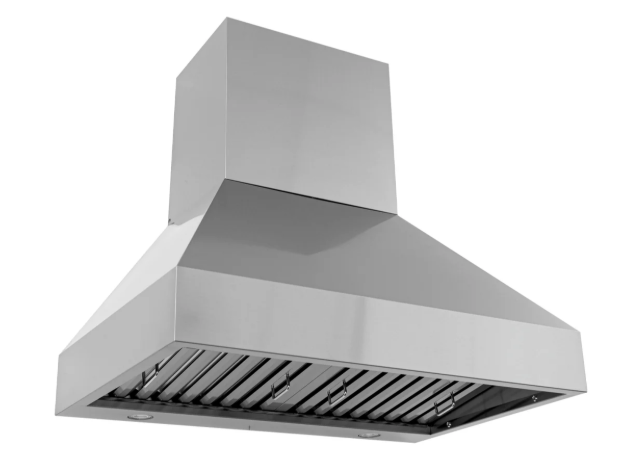
A larger cooking surface can produce substantial smoke, grease, heat, moisture, and airborne particles, particularly when several burners are used simultaneously. Good ventilation depends on more than having a powerful blower above the range. The hood must capture the rising cooking plume and move it efficiently through properly sized ductwork. When a 42 inch exhaust hood starts performing poorly, the cause may be something as simple as dirty filters or as complex as restrictive ductwork or inadequate replacement air. Recognizing early warning signs can help homeowners distinguish normal maintenance needs from problems that require a closer inspection of the ventilation system.
1. Smoke Escapes Around the Hood
One of the clearest indications of poor capture is smoke drifting beyond the edges of the hood instead of being drawn upward.
This can happen when:
- The fan speed is too low
- The hood is mounted too high
- Filters are clogged
- The cooking surface extends beyond the capture area
- Strong cross-drafts disturb rising air
- The duct system restricts airflow
A 42 inch exhaust hood should provide appropriate coverage for the cooking surface beneath it. However, width alone does not guarantee effective capture.
HVI recommends approximately 100 CFM per linear foot of range for wall-mounted installations and 150 CFM per linear foot for island installations. It also notes that professional-style cooking appliances should follow the cooktop manufacturer’s ventilation recommendations.
Cooking on back burners when practical can also improve capture. EPA guidance specifically recommends back-burner use because emissions are more likely to enter the hood effectively.
2. Airflow Feels Weaker Than It Used To
A noticeable reduction in airflow often points to resistance somewhere within the ventilation system.
Grease accumulation on filters is a common starting point. As residue builds, less air can pass efficiently through the filtering area.
The EPA recommends routinely cleaning range hood grease filters and operating an outdoor-vented hood whenever cooking.
If cleaning the filters does not restore performance, other possible causes include an obstructed exterior vent, damaged ductwork, blower problems, or excessive resistance in the duct route.
A 42 inch exhaust hood should be evaluated as an entire system rather than as an isolated appliance. The blower, filters, ductwork, exterior termination, and replacement-air conditions all influence actual airflow.
3. The Hood Has Become Noticeably Louder
A sudden increase in noise can indicate that the blower is working against greater resistance.
Possible reasons include:
- Dirty grease filters
- Loose components
- Duct restrictions
- An obstructed exterior damper
- Blower wear
- Improperly sized ductwork
Range hood sound is commonly measured in sones. HVI explains that hood noise is influenced by airflow, blower design, and the duct system used to move air outdoors. Properly sized and installed ductwork can help control unnecessary sound.
If a hood that previously operated smoothly begins producing rattling, vibration, grinding, or unusually strong airflow noise, the change should not automatically be considered normal aging.
Cleaning and inspecting accessible components can help determine whether the issue is maintenance-related or requires professional evaluation.
4. Grease Is Building Up Around the Kitchen
Finding noticeably more grease on nearby cabinets, walls, ceilings, or appliances can indicate declining capture performance.
Cooking releases grease-containing particles into rising air. An effective hood captures a significant portion of that contaminated plume before it spreads throughout the kitchen.
If a 42 inch exhaust hood is no longer doing this effectively, first inspect the filters and verify that the fan is operating at an appropriate speed.
Heavy frying, grilling, searing, and sautéing can create greater ventilation demands than boiling or light simmering. The EPA notes that cooking methods influence indoor particulate matter levels and that using a range hood while cooking can greatly reduce exposure to cooking-related particles.
The EPA also recommends leaving an outdoor-vented hood running for 10 to 20 minutes after cooking to continue removing residual contaminants.
5. The Duct Run Has Too Many Bends
Sometimes the hood itself is operating correctly, but its ductwork prevents it from reaching expected performance.
Air encounters resistance as it moves through a duct system. Long runs, undersized ducts, flexible ducting, and repeated elbows can all increase that resistance.
HVI recommends metal duct for range hood ventilation and states that smooth metal is preferable to flexible metal because the ridges in flexible duct create turbulence and reduce airflow. It also recommends matching the duct size to the fan outlet, keeping the run short, and minimizing bends.
For a 42 inch exhaust hood, duct design becomes particularly important when a higher-capacity blower is being used.
An installation with a short, appropriately sized exhaust route may perform considerably better than one with the same hood connected to a long path containing several restrictive turns.
6. Doors Become Harder to Open When the Hood Runs
A powerful exhaust system removes a substantial amount of air from the home. In tightly sealed buildings, that can produce noticeable pressure differences when adequate replacement air is unavailable.
Possible warning signs may include:
- Doors becoming harder to open
- Strong drafts through small gaps
- Reduced hood performance
- Pressure-related effects around other ventilation systems
Makeup-air requirements depend on the home, equipment, and locally adopted building code.
The 2024 International Residential Code requires makeup air under specified conditions when a kitchen exhaust system can exceed 400 CFM and certain non-direct-vent fuel-burning appliances are located within the dwelling’s air barrier. Where the provision applies, replacement air must be supplied at approximately the exhaust rate.
Because local jurisdictions may use different code editions or amendments, a high-capacity 42 inch exhaust hood should be evaluated against the requirements applicable to the specific project.
7. Cooking Odors Remain for Hours
Lingering odors can be another sign that ventilation is not effectively removing cooking air.
First confirm that the hood actually vents outdoors. Recirculating systems pass air through filters and return it to the room rather than exhausting it outside.
HVI states that nonducted recirculating kitchen hoods do not provide actual ventilation and recommends direct outdoor exhaust for optimum kitchen air quality.
For an outdoor-vented system, persistent odors may indicate insufficient airflow, dirty filters, poor capture, a blocked exterior outlet, or an inefficient duct layout.
Operating the fan before heavy smoke develops can also improve performance. Waiting until the kitchen is already filled with cooking emissions makes it more difficult for the hood to capture contaminants that have dispersed throughout the room.
Maintenance That Helps Preserve Hood Performance
Routine maintenance can prevent many common ventilation problems before they become significant.
A practical maintenance routine may include:
- Cleaning grease filters regularly
- Wiping accessible grease from the hood
- Checking for unusual fan noises
- Inspecting the exterior vent termination
- Confirming the damper opens correctly
- Keeping the duct outlet unobstructed
- Watching for changes in airflow
- Following manufacturer maintenance instructions
The correct cleaning frequency depends heavily on cooking habits. A household that fries or sears food several times each week will usually accumulate grease faster than one that relies primarily on boiling or light cooking.
A properly maintained 42 inch exhaust hood can continue providing effective capture only when the airflow path remains reasonably clean and unobstructed.
Conclusion
Range hood problems often develop gradually, so reduced airflow, increasing noise, lingering odors, escaping smoke, and unusual grease buildup should not be ignored. Before replacing an entire system, homeowners can inspect filters, airflow, duct routing, exterior termination, and other accessible components to identify the likely source of the problem. Understanding Repairing Your Kitchen Vent Hood can also help determine which issues are reasonable maintenance tasks and which involve electrical, blower, duct, or code-related work better handled by a qualified professional. With appropriate sizing, efficient ductwork, regular cleaning, and adequate replacement air where required, a 42 inch exhaust hood can provide dependable ventilation for larger cooking areas.





Most Commented Posts