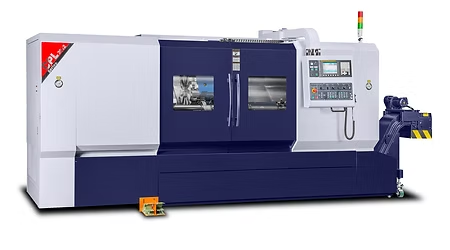
A CNC turning center is a vital piece of equipment in modern manufacturing that automates the turning process for producing cylindrical parts with precision and repeatability. For beginners entering machining or manufacturing industries, understanding the fundamentals of a CNC turning center is essential. This blog explains the basics of these machines, how they operate, key components, common applications, and factors to consider when selecting the right model for your workshop.
What is a CNC Turning Center?
A CNC (Computer Numerical Control) turning center is a machine designed to remove material from a rotating workpiece using precision cutting tools. Unlike manual lathes, CNC turning centers are controlled by computer programs that dictate the movement of axes, speeds, and feeds. This automation ensures high accuracy and consistency, making them ideal for producing complex components in industries such as automotive, aerospace, electronics, and medical devices.
The term “turning center” is often used interchangeably with CNC lathe, but turning centers typically offer more advanced features, including automatic tool changers and live tooling for milling operations. The CNC turning center can perform multiple machining operations in a single setup, reducing cycle times and improving overall efficiency.
How CNC Turning Centers Work
CNC turning centers operate by rotating the workpiece at controlled speeds while a cutting tool removes material to shape the part. The process begins with programming, where engineers use CAD (Computer-Aided Design) and CAM (Computer-Aided Manufacturing) software to create a part design and generate a toolpath. This toolpath is translated into G-code, which the CNC controller uses to precisely control the machine’s movements.
Once the program is loaded, the workpiece is clamped into the spindle chuck or collet. The machine then follows the G-code instructions to move the cutting tool along predefined axes (typically X and Z axes for turning). Advanced turning centers may include a Y-axis or live tooling capabilities for milling and drilling tasks, expanding the machine’s versatility.
Sensors and feedback systems within the machine continuously monitor performance, ensuring that each part is manufactured within tight tolerances. After machining, the finished part is unloaded, and the next cycle begins, often with minimal human intervention.
Key Components of a CNC Turning Center
Understanding the major components of a CNC turning center helps beginners grasp how these machines function:
Spindle
The spindle holds and rotates the workpiece. Its speed and torque determine how effectively material is removed. Modern CNC turning centers use high-performance spindles for precision and durability.
Tool Turret
The tool turret holds multiple cutting tools and indexes them automatically as needed. This allows the machine to perform various operations without manual tool changes.
Bed and Slideways
The machine’s bed and slideways provide stable support for the carriage and tool turret. These components must be rigid and precision-ground to maintain accuracy during high-speed machining.
Control Panel
The CNC control panel houses the interface where operators load programs, input parameters, and monitor machining operations. Modern controls often feature touchscreen displays and advanced simulation tools.
Coolant System
Coolant is used to reduce heat and friction during machining, prolonging tool life and maintaining part quality. CNC turning centers use pumps and nozzles to deliver coolant directly to the cutting zone.
Common Applications of CNC Turning Centers
CNC turning centers are used across industries to manufacture cylindrical parts with high precision. Some common applications include:
- Automotive Components: Shafts, bushings, gears, and engine parts.
- Aerospace Parts: Precision fittings, landing gear components, and structural elements.
- Medical Devices: Surgical instruments, orthopedic implants, and dental components.
- Electronics: Connectors, housings, and precision pins.
The ability to automate complex turning and milling operations makes CNC turning centers indispensable in high-volume production environments.
Advantages of Using CNC Turning Centers
CNC turning centers offer several advantages over traditional machining:
- Accuracy and Repeatability: Computer control ensures consistent output with tight tolerances.
- Electronics: Connectors, housings, and precision pins.
- Efficiency: Automated tool changes and multi-operation capabilities reduce cycle times.
- Reduced Labor Costs: Less manual intervention means skilled operators can oversee multiple machines.
- Flexibility: Capable of machining a wide range of materials, including steel, aluminum, titanium, and plastics.
- Safety: Enclosed machining and automated processes reduce operator risk.
Choosing the Right CNC Turning Center
When selecting a CNC turning center, consider the following:
- Part Size and Material: Machines vary in swing, travel, and spindle power. Match these to your workpieces.
- Axis Configuration: Standard machines handle basic turning, while models with live tooling or Y-axis support more complex tasks.
- Control System: Choose a user-friendly control with strong software support and training resources.
- After-Sales Support: Reliable service, spare parts availability, and technical support are crucial for minimizing downtime.
- Budget and ROI: Evaluate the total cost of ownership, including installation, tooling, and maintenance.
Conclusion
Understanding the basics of a CNC turning center is essential for beginners in machining and manufacturing. These machines provide precision, versatility, and efficiency, making them a cornerstone of modern production. As you grow your workshop capabilities, you may also explore options to buy CNC milling machine to complement turning operations and expand your machining versatility. Whether your goal is rapid prototyping or large-scale manufacturing, a CNC turning center can significantly enhance productivity.


Most Commented Posts