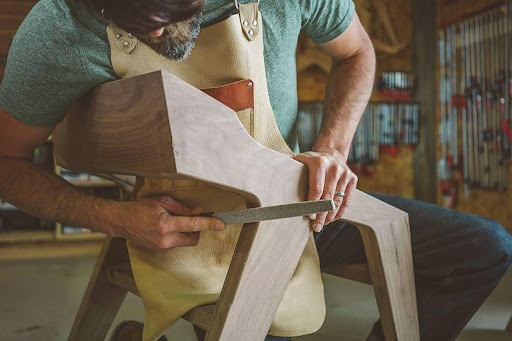
Woodworking requires a combination of skill, creativity, and the right tools to achieve accurate and professional results. While power tools often receive significant attention, many experienced woodworkers continue to rely on traditional hand tools for shaping, refining, and finishing their projects. Among these essential hand tools, the fine rasp remains a valuable option for detailed shaping and controlled material removal.
A rasp is a coarse shaping tool designed to remove wood efficiently, but a rasp offers greater precision and leaves a smoother surface compared to more aggressive rasp varieties. This makes it particularly useful for detailed woodworking tasks, sculptural projects, furniture making, and other applications where accuracy and surface quality are important. Rasps are widely used for shaping wood and refining curves, edges, and contours that may be difficult to achieve with other tools.
What Is a Fine Rasp?
It is a woodworking tool featuring individually raised teeth that remove material through controlled cutting action. Unlike coarse rasps designed for rapid stock removal, they have smaller and more closely spaced teeth that create smoother surfaces while maintaining effective shaping capabilities.
The tool is commonly available in various shapes, including:
- Flat rasps
- Half-round rasps
- Round rasps
- Cabinet rasps
- Specialty profile rasps
Each design serves specific shaping purposes and allows woodworkers to work on different surfaces and contours with precision.
How a Fine Rasp Differs from Other Shaping Tools
Compared to Coarse Rasps
A coarse rasp removes material quickly and is often used during the early stages of shaping. A fine rasp, on the other hand, focuses on refining forms and smoothing surfaces after the initial shaping process.
Compared to Files
Although rasps and files may appear similar, they differ significantly in tooth design. Rasps feature individually raised teeth, while files have closely spaced rows of cut teeth. This allows a fine rasp to remove wood effectively while still maintaining control over the shaping process.
Compared to Sandpaper
Sandpaper is generally used for surface refinement and finishing. A fine rasp removes material more efficiently while still producing a relatively smooth surface that requires less sanding afterward. Many woodworkers use rasps before progressing to files, scrapers, and sandpaper.
Benefits of Using a Fine Rasp
Greater Precision
One of the primary advantages of a fine rasp is the level of control it offers. Woodworkers can carefully remove small amounts of material while maintaining the intended shape of the project.
Smooth Surface Quality
Because the teeth are finer, the resulting surface often requires less additional finishing compared to surfaces shaped with coarse rasps.
Versatility
A fine rasp can be used for various woodworking applications, including shaping curves, refining edges, creating contours, and adjusting joinery components.
Improved Control
Hand tools provide direct tactile feedback, allowing woodworkers to make precise adjustments throughout the shaping process.
Choosing the Right Fine Rasp
Several factors should be considered when selecting a rasp.
Tooth Pattern
Different tooth arrangements produce varying cutting characteristics and surface finishes.
Size
Longer rasps are often preferred for shaping larger curves, while smaller rasps provide greater control for detailed work.
Profile
Flat, half-round, and round rasps each serve unique purposes depending on the shape being created.
Intended Use
The type of woodworking project often determines which rasp will provide the best results.
Selecting the appropriate rasp helps improve both efficiency and craftsmanship.
Conclusion
For woodworkers seeking precision, control, and versatility, the fine rasp remains one of the most useful shaping tools available. Its ability to refine curves, smooth contours, and create detailed forms makes it an essential component of many woodworking projects. For larger shaping tasks and more aggressive material removal, power carving tools for wood can complement traditional hand tools while expanding creative possibilities in the workshop. By combining proper technique with the right tools, woodworkers can use it to achieve accurate, professional-quality results across a wide range of projects.





Most Commented Posts