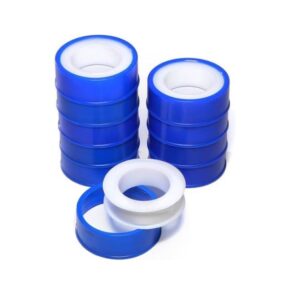
Industrial equipment often depends on small consumable components to maintain consistent performance. Tapes used for insulation, release surfaces, friction reduction and heat-resistant protection are good examples because their role may not be immediately visible during normal machine operation. PTFE tape is valued in these applications because polytetrafluoroethylene combines low friction, non-stick behaviour, chemical resistance and strong temperature stability. The wide PTFE tape referenced in the supplied product listing is a 2-inch-wide PTFE-coated tape supplied in a 1,296-inch roll and identified by manufacturer SKU M2302000. Understanding the material’s properties and appropriate uses helps explain why PTFE tape is used across demanding industrial environments.
What Is PTFE Tape?
PTFE stands for polytetrafluoroethylene, a fluoropolymer known for its chemical inertness, low coefficient of friction and resistance to elevated temperatures. PTFE can be manufactured into films and then converted into different tape constructions depending on the intended application.
Some wide PTFE tapes are coated with pressure-sensitive adhesive, while others are used as non-adhesive film or coated material. The construction matters because an adhesive layer can have different temperature and chemical limits from the PTFE itself. Saint-Gobain, for example, describes PTFE film tapes using silicone adhesive systems for applications requiring high-temperature insulation, release properties and low friction.
This distinction is important when selecting tape for industrial equipment. A tape should not be specified solely because it contains PTFE; its backing thickness, adhesive system, surface characteristics and operating conditions should also match the application.
Why PTFE Has Low-Friction Properties
One of PTFE’s most useful characteristics is its low-friction surface. This means materials can move across a PTFE surface with comparatively little resistance.
In manufacturing equipment, reducing friction can help improve the movement of materials across contact surfaces. Wide PTFE tape film tapes are therefore used in applications involving rollers, guides, seals and other areas where controlled movement or clean release is important. Saint-Gobain identifies low friction and anti-stick performance as key advantages for PTFE tapes used in industrial applications.
The non-stick characteristic also helps reduce the tendency of adhesives, plastics and other materials to remain attached to a treated surface. This can be particularly useful in packaging and heat-sealing equipment.
Heat Resistance and Thermal Stability
Temperature resistance is another major reason PTFE is selected for industrial applications. Depending on the specific tape construction, PTFE products can operate across a broad temperature range. Saint-Gobain states that its PTFE tapes can perform from approximately -73°C to 260°C (-100°F to 500°F).
However, the temperature rating of a complete tape assembly should always be checked against the manufacturer’s specification. The adhesive can become the limiting factor even when the PTFE film itself remains stable at high temperatures.
This is especially important in packaging machinery, where heat-sealing equipment can expose tape surfaces to repeated thermal cycles. Selecting a tape with an appropriate adhesive system and temperature rating can help prevent premature lifting, softening or loss of adhesion.
Chemical Resistance of PTFE
PTFE’s chemical resistance makes it suitable for environments where other polymers may degrade. The material is resistant to many acids, solvents, fuels and alkaline substances, although no material should be treated as universally resistant to every chemical under every condition.
Nitto’s technical information for PTFE film tape notes resistance to many chemicals, including acids, solvents, fuels and most alkalis.
Chemical exposure can vary significantly depending on concentration, temperature and duration. Therefore, engineering teams should consult compatibility data before using PTFE tape in a process involving aggressive chemicals.
Applications in Packaging Machinery
Packaging equipment is one area where PTFE tape can provide practical advantages. Heat-sealing systems, rollers and release surfaces can encounter heat, friction and repeated contact with packaging materials.
A low-friction PTFE surface can help materials move smoothly, while its non-stick characteristics can reduce the accumulation of melted or softened packaging material. Saint-Gobain specifically identifies packaging equipment and heat sealing among applications that can benefit from PTFE’s anti-stick properties.
For automated equipment, maintaining the condition of these surfaces can contribute to consistent operation. A damaged, contaminated or incorrectly installed tape may affect material movement or release and should be inspected as part of routine maintenance.
Why Tape Width Matters
Width is an important specification because it determines how much surface can be covered in a single application. A 2-inch-wide tape can cover a broader contact area than a narrow strip, potentially reducing the number of overlapping passes required.
The product referenced in the supplied URL is specified as 2 inches wide and 1,296 inches per roll, equivalent to 108 feet of material. It is listed as a Lantech stretch-wrap machine part with manufacturer SKU M2302000.
A wider tape is not automatically better for every application. The required width should correspond to the equipment’s original specification, available mounting area and intended function. Using an excessively wide or narrow tape can affect installation and coverage.
Understanding the Importance of Tape Construction
PTFE tape products can differ considerably in thickness, reinforcement, adhesive type and surface finish. These differences influence strength, conformability, temperature performance and durability.
For example, Saint-Gobain’s TF.50 PTFE film tape uses a 50-micron PTFE film with a high-temperature silicone adhesive and is designed for high-temperature insulation and release applications.
Nitto also offers PTFE adhesive tape with silicone adhesive for applications requiring heat resistance, electrical insulation and sliding performance, demonstrating how tape construction can be tailored to specific engineering requirements.
Consequently, maintenance personnel should compare technical specifications rather than selecting a replacement based only on the general term “PTFE tape.”
Inspection and Replacement Considerations
PTFE tape used on industrial machinery can gradually experience wear, edge lifting, contamination, stretching or surface damage. Regular inspection can help identify deterioration before it interferes with machine performance.
When replacement is necessary, technicians should confirm the machine model and original component specification. The Machine Parts Toolbox listing notes that some Lantech parts may have lead times determined by the machine’s specific serial number.
Correct identification is especially important for equipment-specific consumables. A tape that appears similar may have a different width, thickness, adhesive or temperature rating and may therefore perform differently in the machine.
PTFE Tape for Electrical and Insulation Applications
PTFE’s electrical characteristics also make it useful for certain insulation applications. PTFE film tapes can provide dielectric insulation while retaining their thermal and chemical resistance.
Rogers’ DeWAL PTFE tape information identifies high-temperature resistance, electrical insulation, chemical inertness and low friction as important properties for electrical applications.
The correct electrical tape specification depends on voltage, temperature, thickness and relevant safety standards. Industrial users should therefore select products according to the electrical requirements rather than assuming that every PTFE tape is suitable for high-voltage insulation.
How to Choose the Right PTFE Tape
Selecting PTFE tape should begin with the operating environment. Key factors include:
- Required tape width and length
- Temperature range
- Adhesive type, if applicable
- Chemical exposure
- Friction and release requirements
- Mechanical stress and wear
- Electrical insulation requirements
- Surface type and installation method
- Compatibility with the specific machine
Considering these factors can prevent premature failure and help ensure that the tape performs its intended function throughout the maintenance interval.
Conclusion
PTFE tape is a versatile industrial material because its low friction, non-stick surface, chemical resistance and thermal stability allow it to perform in demanding environments. It can support applications involving packaging machinery, heat sealing, rollers, insulation and other equipment where conventional tapes may not provide the required combination of properties.
The 2-inch-wide Lantech tape listed with manufacturer SKU M2302000 illustrates why dimensional accuracy and equipment compatibility matter when selecting replacement consumables. For maintenance teams working with machine and parts, checking the original specification, operating conditions and machine identification before installation can help maintain reliable performance and avoid unnecessary downtime.


Most Commented Posts