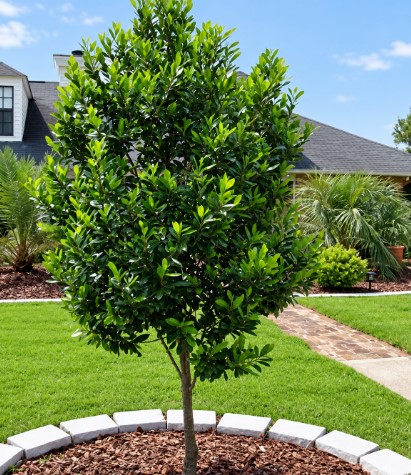
Choosing the right evergreen shrub or small tree can make a significant difference to the appearance and privacy of a landscape. Gardeners often look for plants that provide year-round foliage while also adapting to their local growing conditions. Carolina Cherry is one option that can serve several purposes in residential and commercial landscapes.
The plant is commonly known as Carolina laurelcherry and is scientifically identified as Prunus caroliniana. It is an evergreen member of the rose family and is native to the southeastern United States. Its dense foliage and upright growth habit make it useful for hedges, screens, specimen planting, and other landscape applications.
What Is Carolina Cherry?
Carolina Cherry is an evergreen woody plant that can develop into either a large shrub or small tree. Under suitable conditions, it can grow considerably larger than many typical hedge plants.
Its leaves are glossy, dark green, and relatively narrow, giving the plant a neat appearance throughout much of the year. Small white flowers can appear in clusters, typically followed by small dark fruits.
The plant’s dense branching structure is one reason it is frequently used for screening and hedging. Its evergreen foliage can provide visual separation even during seasons when many deciduous plants have lost their leaves.
Where Does Carolina Cherry Grow Best?
Site selection is important when establishing Carolina laurelcherry. It generally performs best in areas with adequate sunlight and well-drained soil.
The plant can tolerate some shade, but excessive shade may affect growth and foliage density. A location receiving substantial sunlight can encourage stronger, fuller development.
Soil drainage should also be considered. Although established plants can tolerate different soil conditions, consistently waterlogged ground can create problems for many woody landscape plants.
Before planting, evaluate the site’s sunlight exposure, drainage, available space, and surrounding vegetation.
How Large Can It Become?
One of the most important considerations is mature size. Carolina laurelcherry can become a substantial plant if allowed to grow without regular pruning.
Its eventual dimensions depend on growing conditions, cultivar, climate, and management. Gardeners should therefore avoid selecting a planting location based solely on the plant’s size when purchased.
Allow sufficient room for the mature canopy and root system. Planting too close to buildings, walkways, utility infrastructure, or other large plants can create maintenance problems as the tree develops.
Watering Requirements
Newly planted shrubs and trees generally require more consistent watering while their root systems become established. The exact frequency depends on rainfall, temperature, soil type, drainage, and planting location.
Rather than following a fixed schedule in every situation, check the soil and observe the plant’s condition. Water deeply enough to encourage the development of a healthy root system, while avoiding persistently saturated soil.
Once established, Carolina laurelcherry can have greater tolerance for periods of reduced moisture, although prolonged drought can still place stress on the plant.
Pruning and Maintenance
Regular pruning can help maintain the desired size and shape of Carolina laurelcherry, particularly when it is being used as a hedge or screen.
Pruning should be based on the plant’s growth habit and the landscape objective. Removing damaged, dead, or poorly positioned branches can help maintain an attractive structure.
If the plant is being trained as a small tree, selective pruning can help develop a defined trunk and canopy. For hedges, periodic trimming can maintain a more consistent shape.
Avoid excessive pruning simply to keep a naturally large plant extremely small, as this can increase maintenance requirements.
Flowers, Fruit, and Wildlife
Carolina laurelcherry produces small white flowers, which can provide seasonal interest. These flowers may attract pollinating insects.
The plant also produces small fruit after flowering. However, the leaves, seeds, and other parts of Prunus caroliniana contain compounds that can release hydrogen cyanide when plant tissue is damaged or consumed. The plant should therefore be handled thoughtfully, and its fruit and plant material should not be treated as edible.
Gardeners with pets or young children should consider plant placement and review reliable toxicity information before adding it to accessible areas.
Common Landscape Uses
Carolina laurelcherry can be used in several landscape designs. Its evergreen foliage makes it useful for property screening, while its potential to develop into a tree makes it suitable as a structural planting.
It can also be incorporated into mixed borders or used to create a backdrop for smaller flowering plants.
Because the plant can become relatively large, it is generally better suited to locations with adequate room rather than very small planting beds.
Buying and Planting Considerations
When purchasing a Carolina laurelcherry, consider the plant’s current size as well as its expected mature dimensions. A smaller specimen may require more time to establish a substantial screen but can sometimes be easier to handle during planting.
Inspect the plant for healthy foliage, a strong structure, and signs of pests or disease. The planting location should be prepared before the plant arrives so that its roots are not left exposed unnecessarily.
Conclusion
Carolina laurelcherry is a versatile evergreen landscape plant valued for its dense foliage, upright growth, and ability to provide year-round structure. It can work particularly well for privacy screens, hedges, and larger landscape areas when given appropriate growing conditions. For gardeners considering Plant Clearance, understanding the plant’s mature size, sunlight requirements, soil conditions, maintenance needs, and intended landscape use can help make the planting decision more practical and informed.


Most Commented Posts