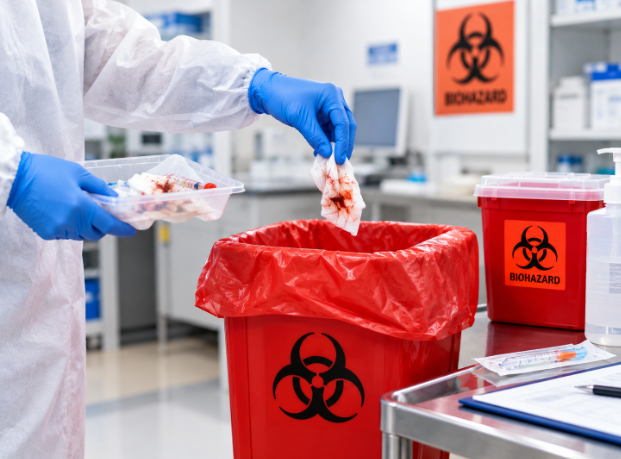
Healthcare facilities, laboratories, and even small clinics generate waste that requires far more careful handling than ordinary trash. Improper handling of sharps, contaminated materials, or pathological waste creates serious health risks for staff, waste handlers, and the public. Facilities managing biohazard disposal need clear protocols covering segregation, storage, and transport, since even small lapses can lead to exposure incidents or regulatory violations that carry significant penalties under state and federal guidelines.
Understanding What Counts As Biohazardous Waste
Not all facility waste falls under strict disposal regulations, so accurately identifying what qualifies matters from the start. Sharps, blood-soaked materials, cultures, and certain laboratory byproducts typically require special handling, while general packaging or non-contaminated paper does not. Misclassifying waste in either direction creates problems, since underclassifying it risks exposure while overclassifying increases disposal costs unnecessarily. Training staff to recognize these distinctions accurately reduces both risk and expense over time.
Proper Segregation At The Point Of Generation
Effective biohazard disposal starts the moment waste is created, not later during collection. Color-coded containers, typically red bags or bins marked with the biohazard symbol, should be placed directly where contaminated materials are generated, whether that’s a patient room, a lab bench, or a procedure area. Mixing regulated waste with general trash after the fact is far riskier and harder to correct than segregating correctly from the outset, since sorting through mixed waste exposes handlers to unnecessary contact with hazardous material.
Storage Requirements Before Pickup
Facilities must store regulated waste in a manner that prevents leakage, pest access, and unauthorized handling while awaiting collection. Storage areas typically need to be secured, properly ventilated, and clearly labeled, with many jurisdictions imposing time limits on how long waste can sit before pickup is required. Facilities that plan storage capacity around their actual generation volume avoid the common problem of overflow, which can force improvised storage that doesn’t meet compliance standards.
Transport And Chain Of Custody
Once collected, regulated waste needs documented tracking from pickup through final treatment or destruction. Manifests or tracking logs establish a chain of custody that protects the generating facility if questions arise later about how materials were handled. Working with a licensed transporter familiar with biohazard disposal regulations in the relevant jurisdiction reduces the administrative burden on facility staff, who often lack the bandwidth to manage detailed compliance paperwork alongside clinical responsibilities.
Treatment Methods And Final Disposal
Autoclaving, incineration, and chemical treatment are among the most common methods used to render biohazardous waste safe before final disposal. The appropriate method often depends on the specific waste category, since sharps and pathological waste may require different treatment than general contaminated materials. Facilities benefit from understanding which treatment methods their disposal partner uses, since this affects both cost and how thoroughly waste is neutralized before it leaves the regulated chain entirely.
Staff Training And Ongoing Compliance
Regulations around regulated waste handling change periodically, and staff turnover means training can’t be a one-time event. Regular refresher sessions covering segregation, container use, and emergency procedures for spills or exposure incidents keep compliance consistent across shifts and departments. Facilities that build training into onboarding and annual review cycles tend to see fewer handling errors than those relying on informal knowledge transfer between staff members.
Conclusion
Proper handling of biomedical medical waste protects staff, patients, and the broader community from exposure risks that come with improperly managed hazardous materials. From accurate classification through segregation, storage, transport, and final treatment, each step in the process depends on consistent protocols and well-trained personnel. Facilities that treat compliance as an ongoing responsibility, rather than a periodic checkbox, tend to maintain safer environments and avoid the costly disruptions that come with regulatory violations.




Most Commented Posts