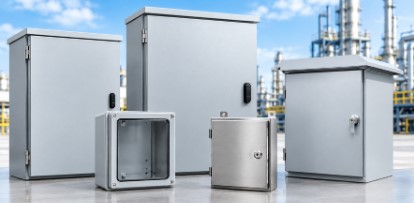
Electrical equipment requires suitable protection from the conditions surrounding its installation. Indoor control equipment, outdoor electrical systems, and industrial machinery can all face different levels of exposure to dust, water, weather, oil, or corrosive substances. Understanding NEMA cabinet ratings provides a useful starting point for determining what type of environmental protection an electrical enclosure should offer.
The National Electrical Manufacturers Association establishes enclosure Types that describe specific environmental protection characteristics. NEMA 250 covers electrical enclosures for equipment rated at 1,000 volts maximum and provides classifications for a range of applications. These classifications help users evaluate enclosure suitability according to the conditions expected at the installation site.
What Are NEMA Cabinet Ratings?
NEMA cabinet ratings identify enclosure Types according to the environmental conditions they are designed to address. Depending on the Type, protection can involve falling dirt, windblown dust, rain, sleet, snow, water exposure, oil, coolants, corrosion, and other environmental factors.
The classification is therefore more specific than simply describing a cabinet as indoor or outdoor. Different Types have different construction and testing requirements, allowing designers and installers to select protection according to the actual operating environment.
NEMA’s published definitions cover numerous enclosure Types, including Types 1, 2, 3, 3R, 4, 4X, 5, 6, 12, 12K, and 13, along with Types intended for certain hazardous locations.
Why Do NEMA Cabinet Ratings Matter?
Environmental exposure can affect electrical equipment over time. Moisture can create problems for electrical components, while dust and other contaminants may accumulate inside unsuitable enclosures. Outdoor installations can additionally face rain, snow, sleet, and windblown materials.
For example, NEMA Type 1 is intended for indoor applications and provides protection against access to hazardous parts and falling dirt. Type 3 is intended for indoor or outdoor locations and addresses falling dirt, windblown dust, rain, sleet, and snow. Type 3R also addresses rain, sleet, and snow while having different requirements concerning solid foreign objects.
This illustrates why the enclosure Type should be matched to the actual installation conditions rather than selected simply because it has a higher or more familiar number.
Common NEMA Cabinet Types
Different NEMA cabinet ratings correspond to different environmental protection requirements.
Type 1
Type 1 cabinets are designed primarily for indoor applications. They provide protection against access to hazardous electrical parts and falling dirt.
Type 2
Type 2 cabinets are intended for indoor locations and provide protection against falling dirt as well as specified water exposure from dripping or light splashing.
Type 3
Type 3 cabinets can be used indoors or outdoors. They provide protection against falling dirt, windblown dust, rain, sleet, and snow and are designed to remain undamaged by external ice formation.
Type 3R
Type 3R cabinets are also designed for indoor or outdoor applications and provide protection against rain, sleet, and snow.
Type 4
Type 4 provides protection against specified solid foreign objects and water exposure, including rain and hose-directed water.
Type 4X
Type 4X provides the relevant Type 4 protection while adding requirements related to corrosion resistance. This can be important in environments where corrosive conditions may be present.
NEMA’s published enclosure definitions provide additional information about these and other Types.
How Should You Choose a NEMA Cabinet Rating?
The first step is to assess the installation environment. Determine whether the cabinet will be located indoors or outdoors and identify possible exposure to rain, snow, dust, water, oil, coolants, chemicals, or corrosive materials.
Next, consider the equipment that will be installed inside. Physical dimensions, mounting arrangements, cable-entry requirements, accessibility, and heat management can all affect the enclosure specification.
Installation methods also deserve attention. NEMA explains that certain Type-rated enclosures have requirements concerning mounting methods and field modifications. The completed installation may also be subject to approval by the Authority Having Jurisdiction.
A suitable rating should therefore be selected by considering the complete installation rather than focusing on a single environmental factor.
NEMA Ratings Compared With IP Ratings
NEMA Types and IP ratings are sometimes used when discussing environmental protection, but they are not identical classification systems. IP ratings are based on IEC 60529 and primarily describe protection against solid particles and water.
NEMA classifications can address additional considerations, including corrosion, oil, coolants, icing, and other environmental conditions. NEMA specifically states that IP ratings are not substitutes for NEMA Type ratings where U.S. electrical installation requirements call for an enclosure Type.
Understanding this distinction is important when equipment specifications reference both NEMA and IP terminology.
Where Are NEMA-Rated Cabinets Used?
NEMA-rated cabinets can be found in many electrical and industrial applications. These can include control systems, manufacturing equipment, automation installations, commercial electrical systems, utility applications, and outdoor equipment.
The appropriate enclosure Type depends on the environment and the equipment being protected. A cabinet inside a clean, dry facility may require considerably different protection from one installed outdoors or in an industrial environment where water, dust, oil, or corrosive substances are present.
The physical construction and installation requirements should also be reviewed alongside the environmental classification.
Conclusion
Understanding NEMA cabinet ratings helps electrical professionals and equipment users evaluate enclosure protection according to the conditions surrounding an installation. Rather than choosing an enclosure based solely on its appearance or size, the environmental conditions and equipment requirements should be assessed first. When comparing NEMA enclosures, consider factors such as indoor or outdoor placement, exposure to water and dust, potential corrosion, mounting requirements, cable entry, accessibility, and the electrical equipment being housed. The applicable standard and manufacturer documentation should also be reviewed before installation.






Most Commented Posts