Furniture has evolved beyond basic functionality to become an artistic expression within modern interiors. Today, designers and craftsmen are focusing on organic shapes, tactile surfaces, and personalized aesthetics to create unique pieces. One of the most significant trends shaping this transformation is sculpted furniture, where design meets craftsmanship to produce visually striking and highly functional creations.
What Is Sculpted Furniture?
Sculpted furniture refers to pieces that are shaped with curves, contours, and organic forms rather than straight lines and rigid geometry. Unlike traditional furniture, these designs emphasize fluidity, ergonomics, and artistic detail.
This style often involves carving, shaping, and refining wood or other materials to achieve a natural, hand-crafted look. The result is furniture that feels more dynamic and engaging, both visually and physically.
The Role of Craftsmanship in Sculpted Designs
Creating sculpted furniture requires a high level of skill and precision. Craftsmen must understand material behavior, grain direction, and structural balance to ensure durability while achieving artistic form.
Unlike mass-produced furniture, sculpted pieces often go through multiple stages of refinement. From rough shaping to fine detailing, each step contributes to the final aesthetic and functionality. This hands-on approach allows for greater creativity and customization.
Importance of Power Carving in Furniture Making
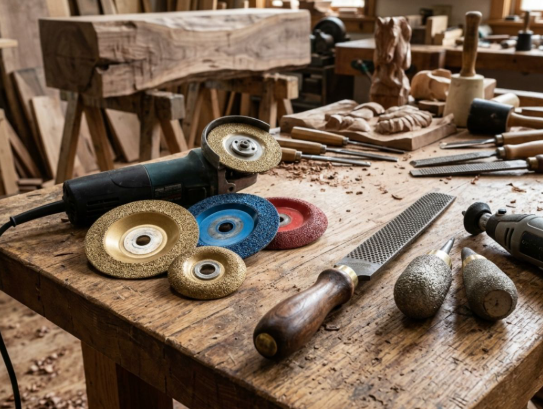
Modern furniture makers increasingly rely on power carving tools to achieve intricate designs and efficient shaping. These tools allow artisans to remove material quickly while maintaining control over curves and textures.
Power carving tools act like rotary chisels, enabling both rough shaping and fine detailing in a single workflow. They are widely used for creating ergonomic contours, blending joints, and adding decorative textures to furniture surfaces.
Additionally, power carving allows craftsmen to work on complex geometries and tight areas that are difficult to achieve with traditional hand tools. This makes it easier to produce detailed and customized designs.
Key Techniques Used in Sculpted Furniture
Several techniques are essential in creating sculpted furniture:
- Material Removal: Rapid shaping of raw wood to establish the basic form.
- Contour Shaping: Developing smooth curves and transitions for comfort and aesthetics.
- Surface Texturing: Adding depth and character through patterns and finishes.
- Blending and Refinement: Ensuring seamless transitions between different parts of the furniture.
These techniques help transform flat materials into three-dimensional pieces that feel natural and visually appealing.
Benefits of Sculpted Furniture
Sculpted furniture offers multiple advantages beyond its artistic appeal. One major benefit is improved ergonomics. Curved surfaces and shaped seating provide better comfort compared to flat designs.
Another advantage is uniqueness. Each piece often carries distinct characteristics, making it stand out in any interior setting. Sculpted furniture also enhances tactile experience, encouraging interaction and engagement.
From a design perspective, these pieces can serve as focal points in a room, adding depth and personality to the overall space.
Applications in Modern Interiors
Sculpted furniture is widely used in both residential and commercial spaces. Common applications include:
- Sculpted chairs and seating with ergonomic curves
- Live-edge tables with organic shapes
- Custom cabinetry with textured surfaces
- Decorative wall panels and installations
These applications highlight how sculpted furniture can blend functionality with artistic expression.
Factors to Consider When Designing Sculpted Furniture
When working with sculpted designs, several factors should be considered:
- Material Selection: Different woods and materials respond differently to carving and shaping.
- Tool Selection: Choosing the right tools ensures precision and efficiency.
- Design Balance: Maintaining structural integrity while achieving artistic form.
- Finishing Techniques: Proper finishing enhances both durability and visual appeal.
Careful planning and execution are essential to achieve high-quality results.
Conclusion
Sculpted furniture represents a perfect blend of artistry and practicality, transforming everyday objects into expressive design elements. With advancements in techniques and tools, craftsmen can now achieve greater precision and creativity than ever before. The use of power carving tools has significantly contributed to this evolution, enabling faster shaping, detailed textures, and complex forms that define modern furniture design.





Most Commented Posts