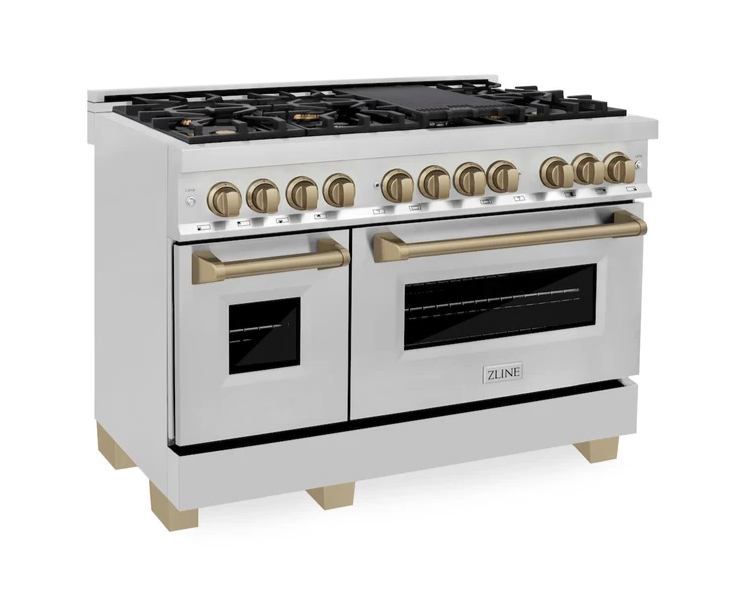
The range is often the centre of a kitchen, bringing the cooktop and oven together in one appliance. Choosing the right model, however, involves more than matching its finish to the cabinetry. Size, fuel type, burner configuration, oven capacity, cooking habits, and available ventilation all affect how well a range fits into a kitchen. Kitchen ranges are available in a wide range of configurations, from compact models for smaller spaces to larger units designed for frequent cooking and entertaining. Understanding these differences can make it easier to select an appliance that fits both the space and the way you cook.
Start With the Available Space
Measurements should be one of the first considerations when selecting a range. Check the width of the opening, countertop depth, surrounding clearance, and available space for doors and controls.
Current range collections include models in sizes from 24 to 60 inches, giving homeowners options for different kitchen layouts. The collection also includes 30-, 36-, and 48-inch models in numerous configurations.
A larger range can provide additional cooking space, but it also requires more room and may affect cabinetry and ventilation plans. Measuring the installation area before shopping can prevent compatibility issues later.
Choose a Fuel Type That Matches Your Cooking Style
Fuel type can influence how a range feels and performs during everyday cooking. Gas ranges provide direct flame control, while dual-fuel models combine a gas cooktop with an electric oven. Induction ranges use electromagnetic cooking technology and can offer a different approach to temperature control and surface cleaning.
The collection includes all-gas, dual-fuel, gas/electric, gas/gas, and induction configurations.
Think about which cooking methods you use most often. Someone who frequently sautés, sears, and cooks over an open flame may have different priorities from someone who spends more time baking and roasting.
Consider Burner and Oven Capacity
The number of burners should reflect how many cooking tasks you typically perform at once. A household preparing several dishes simultaneously may benefit from additional burners, while a smaller cooking setup may not require the extra capacity.
Oven configuration matters as well. Some models feature a single oven, while larger ranges may include two ovens. The collection currently includes both single- and double-oven models, along with configurations offering between three and eight burners.
A kitchen stove and oven combination should therefore be assessed as one complete cooking system rather than choosing the cooktop and oven features separately.
Look at Features That Support Your Cooking Routine
Additional features can make a meaningful difference depending on how you use the appliance. Griddles, convection ovens, multiple burners, brass burners, and different oven configurations are available across various models.
A built-in griddle, for example, can provide a dedicated flat cooking surface without requiring a separate countertop appliance. Double ovens can also be useful when different dishes need to cook at different temperatures.
Match the Range With Your Ventilation
Cooking produces heat, steam, smoke, and odours, so ventilation should be planned alongside the range. The hood needs to work with the range’s width, cooking output, installation position, and kitchen layout.
This is particularly important when choosing a high end kitchen range, as larger cooking surfaces and higher-output configurations may require more careful ventilation planning. The collection includes range hood categories for under-cabinet, island, wall-mounted, and insert installations.
Planning the range and hood together can help maintain both practical performance and visual balance.
Consider Finish and Overall Kitchen Design
The range is a prominent visual element, so its finish and details should complement the surrounding cabinetry and other appliances. Current options include stainless steel, satin stainless steel, black stainless steel, matte white, and several accent finishes such as champagne bronze, gold, and matte black.
Handle styles and door colours can also influence the overall appearance. Choosing a finish that works with the refrigerator, dishwasher, hood, and hardware can create a more coordinated kitchen.
Conclusion
Selecting kitchen ranges requires balancing available space, fuel type, cooking capacity, features, ventilation, and design. For those exploring different sizes, configurations, finishes, and cooking technologies, Smart Home Luxury offers a broad range collection designed around different kitchen layouts and cooking requirements. Comparing these factors helps homeowners focus on how an appliance will function in their actual kitchen rather than choosing based on appearance alone.






Most Commented Posts