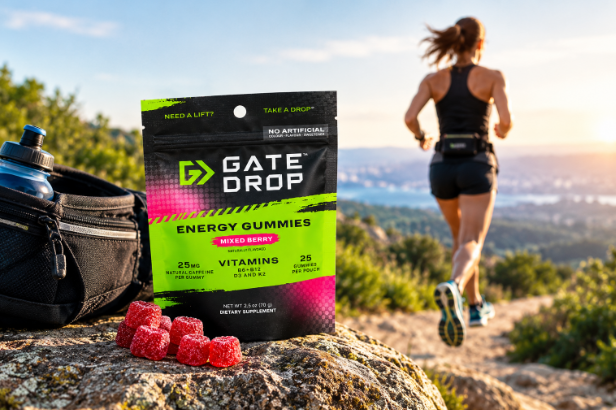
Runners often need a convenient way to maintain energy, alertness, or focus during training and longer events. Carrying bulky drinks or containers is not always practical, especially during outdoor runs, races, or travel. This is where a portable energy supplement can be useful. These products may come as gummies, chews, gels, powders, or compact tablets and are designed to be easy to carry and consume.
However, portability is only one factor to consider. The ingredients, serving size, intended purpose, caffeine content, carbohydrate level, and timing can all affect whether a product is suitable for a runner. Understanding these factors can make it easier to choose a supplement that supports performance without adding unnecessary ingredients or excessive stimulation.
What Is a Portable Energy Supplement?
A portable energy supplement is a compact product designed to provide ingredients associated with energy production, alertness, or exercise performance.
Depending on the formulation, it may contain:
- Caffeine
- Carbohydrates
- Electrolytes
- Vitamins
- Amino acids
- Botanical extracts
Different ingredients serve different purposes. Caffeine, for example, can influence the central nervous system and may improve alertness and reduce perceived exertion. Carbohydrates, by contrast, provide fuel that muscles can use during prolonged exercise.
That means runners should first decide what they actually need. A product intended to improve mental alertness is not necessarily the same as one designed to provide substantial carbohydrate intake during an endurance event.
Why Does Portability Matter for Runners?
Running places practical limits on what athletes can carry comfortably. Bottles, large containers, or products requiring preparation may become inconvenient during longer distances.
A compact portable energy supplement can fit into a pocket, running belt, hydration vest, or race pack. This makes it easier to consume at a planned stage of training without stopping.
Portability can be especially valuable during:
- Long-distance runs
- Trail running
- Half marathons and marathons
- Training away from home
- Early-morning sessions
- Running events with limited aid stations
Convenience should not replace nutritional planning, however. A runner should still know exactly how much caffeine, carbohydrate, and other active ingredients each serving provides.
Should Runners Look for Caffeine?
Caffeine is one of the most thoroughly researched performance-related ingredients.
The International Society of Sports Nutrition reports that caffeine can improve several types of exercise performance, with aerobic endurance showing some of the most consistent benefits. Research commonly finds benefits at doses around 3–6 mg per kilogram of body weight, although individual responses vary considerably.
Caffeine may also improve attention and vigilance, which can become relevant during prolonged exercise when mental fatigue increases.
For runners choosing a portable energy supplement, the amount of caffeine per serving should therefore be clearly understood. More caffeine does not automatically produce better performance. Very high doses can increase the likelihood of unwanted effects and are generally unnecessary for obtaining an ergogenic benefit.
What About Carbohydrates During Running?
Carbohydrates play a different role from caffeine because they supply energy rather than primarily stimulating the nervous system.
Athletes involved in regular endurance training generally have higher carbohydrate requirements than sedentary individuals. Traditional sports nutrition guidance has suggested daily carbohydrate intakes of roughly 5–7 grams per kilogram of body weight for general training and higher amounts for more demanding endurance programs.
During prolonged exercise, carbohydrate-containing products may also help runners maintain fuel availability.
This is why some running supplements combine carbohydrates with caffeine. One component supplies usable energy while the other may influence alertness and perceived effort.
A short recreational run may not require supplemental carbohydrates at all, while a much longer endurance session can create very different nutritional demands.
When Should a Portable Energy Supplement Be Taken?
Timing depends largely on the ingredients.
For caffeine, approximately 60 minutes before exercise has traditionally been a common research protocol. However, the optimal timing may differ according to the delivery method. The ISSN notes that alternative caffeine forms such as gum, gels, and chews may have different timing characteristics from conventional capsules.
Newer research on caffeinated chewing gum also highlights rapid caffeine absorption as one reason compact oral formats can be practical for athletes.
For runners using a portable energy supplement, it is therefore useful to check whether the product is intended for consumption before exercise, during exercise, or both.
Trying a new supplement for the first time on race day is generally less sensible than testing it during training, when an athlete can observe digestive tolerance, stimulation level, and timing.
What Should Runners Check on the Label?
The label provides more useful information than broad claims such as “energy,” “performance,” or “focus.”
Important details include:
Caffeine Per Serving
Know exactly how much is present and include coffee, tea, energy drinks, and other sources when calculating total daily intake.
Carbohydrates and Sugar
Carbohydrates may be beneficial during prolonged endurance activity, but the required amount depends on workout duration and overall fueling strategy.
Serving Size
A package may contain several servings even when it appears designed for one-time use.
Additional Stimulants
Multiple stimulating ingredients can make total effects more difficult to predict.
Ingredient Transparency
Clearly stated ingredient amounts make it easier to evaluate whether the formulation matches the intended purpose.
These considerations help separate practical supplementation from simply choosing whichever product appears most convenient.
Can Energy Supplements Replace Proper Running Nutrition?
No. A portable energy supplement should complement a broader performance strategy rather than replace it.
Running performance depends on factors such as:
- Regular training
- Adequate calorie intake
- Carbohydrate availability
- Hydration
- Electrolyte balance
- Sleep
- Recovery
A stimulant may temporarily reduce the perception of fatigue, but it cannot completely correct inadequate sleep or insufficient fueling.
Similarly, a small chew or gummy may be easy to consume but may not provide enough carbohydrate for a multi-hour endurance session unless it is part of a broader fueling plan.
Conclusion
Compact supplements can be useful for runners because they are easy to carry, simple to portion, and practical during training or races. Choosing an appropriate portable energy supplement requires looking beyond convenience and evaluating caffeine content, carbohydrates, dosage, timing, and personal tolerance. Some runners may prefer energy gummies for running because they provide a compact format that can be carried in a pocket or running belt, but the actual usefulness of any gummy depends on what it contains and how it fits into the individual’s fueling strategy. The most effective approach is to test supplements during training, use them according to their intended purpose, and treat them as one part of a larger routine built around nutrition, hydration, sleep, and consistent conditioning.







Most Commented Posts