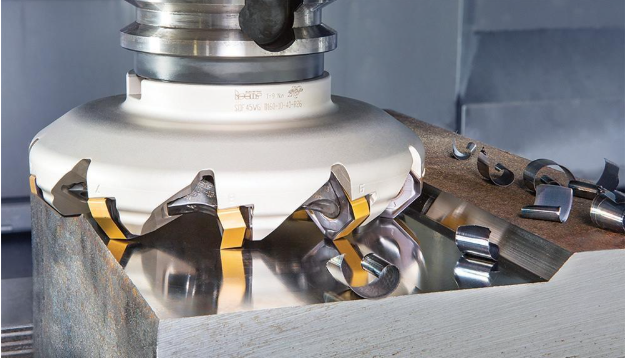
What separates an ordinary machined component from one that performs reliably under demanding industrial conditions? Often, the answer lies in precision. From automotive transmissions and industrial gear systems to aerospace components and specialized machinery, manufacturers depend on cutting tools that can produce accurate profiles and consistent results.
For manufacturers across the United States, selecting the right tooling is an important part of maintaining production quality. The challenge becomes even more significant when components require specialized contours, accurately machined rack teeth, or custom geometries that standard cutting tools cannot easily produce.
This is where high-quality form milling tools and experienced rack milling cutter companies become essential considerations. The right tooling can help manufacturers meet component specifications, improve machining consistency, and support efficient production.
S.S. Tools manufactures precision milling cutters for a range of tooth forms and specialized machining applications. Let’s explore how these tools work, where they are used, and what American manufacturers should consider when choosing the right cutting tool and supplier.
What Are Form Milling Tools?
Form milling tools are specialized cutting tools designed to machine a particular shape or contour into a workpiece. Unlike general-purpose cutters, which are used for broader machining operations, form milling tools are designed around the geometry of the profile being produced.
They are useful when a component requires a specific shape that must be reproduced accurately across multiple parts. Depending on the application, this can include concave and convex profiles, radii, splines, serrations, and special thread forms.
For example, an industrial equipment manufacturer may need a component with a curved profile that must fit precisely within a mechanical assembly. A suitably designed form milling cutter can help produce the intended contour while reducing the need for multiple separate machining operations.
Why Are Form Milling Tools Important?
- Consistent profile production
A cutter designed for a specific profile helps reproduce the intended geometry across production runs, provided the machine setup and cutting conditions are properly controlled.
- Support for specialized components
Custom form milling tools can address machining requirements that standard cutters may not accommodate efficiently.
- Improved machining efficiency
Depending on the component design, a form cutter may reduce the number of separate operations needed to produce a particular contour.
- Application-specific flexibility
Manufacturers can select or commission cutters designed around their drawings, materials, and production requirements.
These advantages make form milling tools valuable for precision machining operations in which component geometry matters as much as production efficiency.
Understanding Rack Milling Cutters
Rack-and-pinion systems are widely used to convert rotational motion into linear movement. They appear in industrial machinery, positioning equipment, automation systems, and various mechanical applications.
A rack consists of a straight toothed component that engages with a pinion gear. For this system to operate as intended, the rack teeth must have the appropriate geometry, spacing, and dimensions.
Rack milling cutters are specialized tools designed to machine these teeth. Their design must correspond to the intended rack profile and manufacturing requirements.
For American manufacturers, selecting an appropriate rack milling cutter means considering more than the cutting operation itself. Tooth geometry, pitch accuracy, workpiece material, machine compatibility, and inspection requirements all contribute to the finished component’s quality.
Where Are Rack Milling Cutters Used?
Rack milling cutters support the manufacture of components used across several industries.
- Automotive manufacturing: Rack-and-pinion mechanisms and other mechanical motion systems.
- Industrial automation: Positioning equipment and machinery requiring controlled linear movement.
- Machine tools: Rack-based movement systems used in selected machine designs.
- Heavy equipment: Industrial mechanisms that depend on accurate linear positioning.
- Specialized engineering: Custom rack components manufactured to specific engineering drawings.
S.S. Tools offers rack milling cutters in straight and helical gash designs, with high pitch accuracy identified as a key product feature.
What Should You Look for in Rack Milling Cutter Companies?
Choosing between rack milling cutter companies requires evaluating technical capability, product quality, and the supplier’s ability to understand your application.
For manufacturers in the United States, the ideal supplier should be able to assess the component specifications and help identify tooling that matches the intended machining process.
- Manufacturing Accuracy
Rack teeth must meet the specified profile and pitch requirements to achieve the intended engagement with the mating pinion. Accurate tooling helps establish the conditions required for consistent machining results.
However, finished-part accuracy also depends on machine condition, workholding, tool setup, cutting parameters, and quality inspection.
- Appropriate Tool Materials
Tool material affects wear resistance and suitability for different machining conditions.
S.S. Tools lists conventional and powder-metallurgy high-speed steel grades for its milling cutter range, including M35, S290, S390, ASP 2030, ASP 2052, and ASP 2060.
The appropriate grade depends on the application, workpiece material, cutting conditions, and expected tool performance.
- Cutter Design Options
Different rack designs may require different cutter configurations. Manufacturers should verify that the proposed tool matches the intended rack geometry and machine setup.
Discussing the engineering drawing with the supplier can help clarify the correct specifications before an order is placed.
- Custom Tooling Capabilities
Standard tooling does not suit every manufacturing requirement. Some projects involve unusual dimensions, specialized tooth profiles, or customer-specific tolerances.
Working with a manufacturer that can evaluate custom requirements helps ensure the selected tool is designed around the actual component rather than forcing the component into a standard tooling limitation.
How to Choose the Right Form Milling Tools for Your Application
Selecting form milling tools begins with understanding the component, not simply comparing available cutters.
Start With the Component Drawing
Identify the required contour, dimensions, tolerances, workpiece material, and any special geometric features. Accurate drawings provide the foundation for selecting a suitable cutter.
Evaluate Tool Material and Coating
The tool material should be appropriate for the workpiece and operating conditions. Depending on the application, a suitable PVD coating may help improve wear resistance and reduce friction.
S.S. Tools lists coating options including TiN, Alcrona, and Altensa across its milling cutter range. The best choice depends on the tool substrate, cutting conditions, and production objectives.
Check Machine Compatibility
Confirm the cutter’s mounting dimensions, bore, machine interface, and operating requirements. Spindle capability, workholding, and setup stability should also be considered.
Consider Production Volume
A tooling solution for a high-volume production line may differ from one intended for occasional custom machining. Evaluate expected tool life, regrinding requirements, setup time, and overall production cost before making a decision.
Why Consider S.S. Tools for Precision Milling Cutters?
When sourcing tooling internationally, American manufacturers need a clear understanding of the supplier’s product range, engineering capabilities, and manufacturing approach.
S.S. Tools is an India-based manufacturer of gear cutting tools serving industries such as automotive, aerospace, railways, and industrial machinery.
The company’s milling cutter range includes tools for standard involute profiles, sprockets, splines, worm profiles, serrations, rack cutting, and specialized concave and convex forms. It also identifies conventional and powder-metallurgy high-speed steels and multiple PVD coating options within its published product information.
For rack applications, S.S. Tools offers straight and helical gash designs. For specialized components, its form milling cutters can be developed to suit customer requirements.
The company also describes its use of computer-aided design and manufacturing, CNC equipment, and in-process quality control as part of its manufacturing approach.
For U.S. buyers, sharing a component drawing and discussing required tolerances, machine compatibility, customization, lead time, and shipping arrangements is a practical starting point.
Explore the S.S. Tools milling cutters range to learn more about available tooling options.
Frequently Asked Questions
What are form milling tools used for?
Form milling tools are designed to machine specific contours, including concave and convex shapes, radii, and specialized profiles. The exact application depends on the cutter’s geometry.
How do rack milling cutters work?
Rack milling cutters remove material from a workpiece to create the required rack tooth profile. The cutter must match the intended geometry and machining requirements.
How can I evaluate rack milling cutter companies?
Review their product range, engineering capabilities, material options, customization support, quality-control practices, and ability to assess your component specifications.
Can S.S. Tools manufacture custom form milling cutters?
S.S. Tools states that its special form milling cutters can be made to suit customer component requirements, including concave, convex, radius, and special thread forms.
What information should I provide when requesting a milling cutter?
Prepare the component drawing, dimensions, tolerances, workpiece material, machine specifications, and estimated production volume. These details help the manufacturer evaluate the tooling requirements.
Conclusion: Make Precision Your Manufacturing Advantage
Successful precision machining starts with choosing the right tool for the right application. Form milling tools help manufacturers produce specialized contours, while rack milling cutters support the accurate machining of toothed components used in motion and positioning systems.
For American manufacturers, evaluating capable rack milling cutter companies and selecting suitable form milling tools can support consistent production quality and better-informed tooling decisions.
S.S. Tools offers milling cutters for standard and specialized profiles, including rack cutting and custom form applications. By matching cutter design, material, coating, and machine compatibility to your production requirements, you can build a stronger foundation for reliable machining.
Looking for a milling cutter that matches your component specifications? Visit S.S. Tools to explore its product range and discuss your precision tooling requirements.






Most Commented Posts