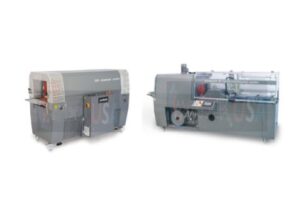
Packaging operations often need equipment that improves consistency without requiring a fully automated production line. This is where semi-automatic sealing equipment can be useful. An L-sealer wraps products in shrink film and creates an L-shaped seal around the package before it moves to a heat-shrinking stage. For businesses handling low- to medium-volume production, a semi automatic L sealer machine can provide a practical balance between operator control, packaging consistency, and production efficiency.
What Is a Semi Automatic L Sealer Machine?
A semi automatic L sealer machine is packaging equipment that uses an L-shaped sealing bar to cut and seal shrink film around a product. The operator typically positions the product within the folded film, places it in the sealing area, and activates the sealing cycle.
Unlike fully automatic systems, semi-automatic L-sealers retain a degree of operator involvement. This can make them suitable for businesses that process different product sizes or have production volumes that do not justify complete automation.
The LMC Series, for example, uses a motor-driven sealing bar and is designed for L-seal applications where speed and consistent operation are important. Different models provide different sealing-area dimensions to accommodate varying package sizes.
How Does an L-Sealer Work?
The basic process is relatively straightforward. A product is placed between two layers of center-folded shrink film. The operator positions the film and product beneath the L-shaped sealing bar.
When the sealing cycle begins, the bar closes and simultaneously cuts and seals the film along two sides. The resulting package is enclosed in film but may still contain excess air or loose film.
The sealed product can then be transferred to a heat shrink tunnel. Controlled heat causes the film to contract around the product, creating a tighter and more finished package.
This two-stage process means the L-sealer and heat tunnel perform different functions. The sealer creates the package enclosure, while the tunnel provides the heat needed to shrink the film.
What Products Can Be Packaged?
A semi automatic L sealer machine can be used for a broad range of products when the equipment and film specifications are appropriate. Common applications can include books, textiles, toys, consumer goods, printed materials, disposable products, and various retail items.
The suitability of an L-sealer depends primarily on product dimensions, weight, shape, and the type of film being used. The LMC Series is available in different configurations, including models with sealing areas of approximately 23 by 17 inches, 32 by 26 inches, and 35.5 by 25.5 inches.
Businesses should measure their smallest and largest products before selecting equipment. This helps determine the appropriate sealing area and film dimensions.
What Are the Benefits of Semi-Automatic L-Sealing?
One of the biggest advantages of a semi automatic L sealer machine is the balance between automation and flexibility. Operators remain involved in product positioning, while the machine performs the repetitive sealing and cutting process.
Potential benefits include:
- Consistent sealing across production runs
- Reduced repetitive manual sealing
- Easier handling of different product sizes
- Lower automation requirements than fully automatic systems
- Controlled sealing temperature and cycle operation
- Compatibility with downstream shrink tunnels
- Practical operation for small and medium production environments
Semi-automatic equipment can therefore be useful for companies that need more consistency than manual packaging can provide but do not require a completely automated line.
Which Shrink Films Can Be Used?
Film compatibility is an important consideration when choosing an L-sealer. Different shrink films have different thicknesses, sealing characteristics, strength, and shrink temperatures.
Polyolefin and PVC films are commonly associated with L-sealing applications, although the appropriate film depends on the product and machine configuration. The film width should also be selected according to product dimensions and the sealing area.
Using unsuitable film can result in weak seals, excessive film waste, poor shrinkage, or inconsistent package appearance. Businesses should therefore confirm film specifications before purchasing or configuring the equipment.
What Should You Consider Before Buying?
Choosing a semi automatic L sealer machine requires more than comparing the physical size of the equipment. Several factors can affect whether a particular model is appropriate.
Product Dimensions
Measure product length, width, and height carefully. Include packaging, trays, or other components that will remain with the product during sealing.
Production Volume
Estimate the number of packages required per hour and per shift. Semi-automatic equipment can be particularly useful where production is steady but product loading still benefits from human control.
Sealing Area
The sealing bar must be large enough to accommodate the largest package being processed. Selecting a machine with insufficient capacity can restrict future production flexibility.
Film Type
Confirm the required film material, thickness, width, and shrink characteristics before selecting the machine.
Available Space
Allow room around the machine for operators to position products, load film, perform adjustments, and carry out routine maintenance.
How Does a Semi-Automatic Machine Compare With a Fully Automatic System?
The primary difference is the level of operator involvement. With a semi-automatic L-sealer, the operator generally positions products and initiates the sealing cycle. A fully automatic system can automate product feeding, film handling, sealing, and product transfer to a greater degree.
Semi-automatic equipment can be advantageous when product sizes vary or production volumes are moderate. Fully automatic equipment becomes more attractive when continuous high-volume production and reduced operator intervention are priorities.
The right choice depends on production volume, labor availability, product variation, and the desired level of automation.
What Role Does the Heat Tunnel Play?
An L-sealer and heat tunnel are often used together, but they have separate functions. The L-sealer encloses and seals the product in shrink film. The heat tunnel then applies controlled heat to shrink the film.
Tunnel temperature, airflow, and conveyor speed must be matched to the film and product. If the temperature is too low, the film may remain loose. Excessive heat can cause unwanted shrinkage or damage.
A properly matched sealing and shrinking system can produce a more consistent finished package than treating the two processes independently.
Maintenance and Operator Training
Routine maintenance is important for keeping sealing equipment operating consistently. Operators should inspect the sealing bar, cutting components, film path, controls, and other moving parts according to the manufacturer’s recommendations.
The sealing area should also be kept clean because film residue can affect sealing quality. Operators should know how to adjust temperature, cycle settings, film positioning, and other relevant controls.
Training is particularly important with semi-automatic equipment because the operator remains an active part of the packaging process. Correct product positioning and film placement can significantly affect final package quality.
When Is a Semi-Automatic L-Sealer the Right Choice?
A semi automatic L sealer machine can be a suitable option when a business needs repeatable shrink-film sealing but still requires flexibility in product handling. It can bridge the gap between manual packaging and fully automated production.
It is especially useful for operations with moderate production volumes, varied product dimensions, or frequent product changeovers. Businesses should evaluate their actual packaging workflow before deciding whether semi-automatic or fully automatic equipment provides the better long-term fit.
Conclusion
A semi automatic L sealer machine can help businesses improve shrink-film sealing consistency while maintaining operator flexibility. Its L-shaped sealing mechanism allows products to be enclosed in film before they move through a heat tunnel for the final shrinking process. Before selecting equipment, businesses should evaluate product dimensions, production volume, film specifications, sealing-area requirements, available workspace, and desired automation level. Maripak USA can be researched as one industry resource when comparing semi-automatic L-sealer configurations and related shrink-packaging equipment. Choosing equipment according to the complete packaging workflow can help businesses achieve consistent results without investing in more automation than their operation requires.




Most Commented Posts