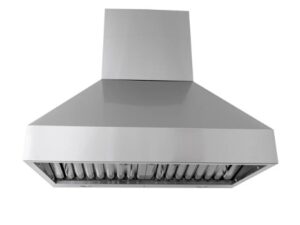
Large cooking ranges can generate substantial amounts of heat, smoke, steam, grease, and cooking odours, making effective ventilation an important part of kitchen design. A properly selected exhaust hood can help capture these by-products and move them away from the cooking area. However, choosing a ventilation system for a large range involves more than simply selecting the widest available model. Airflow capacity, hood dimensions, ductwork, installation height, noise, filters, and maintenance all deserve consideration. A 60 exhaust hood can be an appropriate solution for particularly wide cooking surfaces, but its performance depends on how well the hood matches the range and the overall ventilation system.
Start With the Range Size
The first step in choosing an exhaust hood is determining the dimensions and configuration of the cooking appliance. Large professional-style ranges may contain multiple burners, griddles, ovens, or other cooking surfaces.
A hood should provide sufficient coverage across the cooking area so that smoke and heat generated around different burners can be captured effectively. If the hood is too narrow, cooking by-products may escape around the sides before reaching the ventilation system.
A 60-inch hood is particularly relevant for kitchens featuring extra-wide ranges or cooktops. However, the exact hood width should always be compared with the manufacturer’s recommendations for the appliance.
Determine the Required Airflow
Airflow is typically measured in cubic feet per minute, or CFM. It indicates how much air the ventilation system can move.
The appropriate CFM depends on factors such as the type of cooking, heat output, range configuration, and whether the cooking appliance is gas or electric. High-temperature cooking methods such as grilling, searing, and frying generally produce more heat and grease than low-temperature cooking.
For gas ranges, one commonly used guideline is a minimum of 100 CFM for every 10,000 BTUs of cooking power. Therefore, a 100,000-BTU range would require at least 1,000 CFM under this guideline.
Choose the Right Hood Configuration
Kitchen layout plays a major role in determining which type of exhaust hood is appropriate.
Wall-mounted hoods are designed for cooking ranges positioned against a wall. They can provide a straightforward installation when an exterior wall or suitable duct route is available.
Island hoods are designed for cooking surfaces located within a kitchen island. Since air can move around the cooking surface from multiple directions, the hood needs appropriate dimensions and airflow to provide effective capture.
Plan the Ductwork Carefully
A powerful fan cannot compensate for poorly designed ductwork. The duct system determines how efficiently air can travel from the hood to the exterior.
Duct diameter should be appropriate for the hood’s airflow requirements. Undersized ducts can restrict airflow and potentially increase operating noise.
Before purchasing a 60 exhaust hood, homeowners should determine whether the existing ductwork can support the selected model or whether modifications will be necessary.
Consider the Installation Height
The distance between the hood and the cooking surface affects both performance and safety. Installing the hood too high may reduce its ability to capture smoke and steam, while installing it too low could interfere with cooking or fail to meet the appliance and hood manufacturer’s requirements.
Installation height recommendations can vary according to the hood design and cooking appliance. Always follow the manufacturer’s specifications rather than relying on a single measurement for every kitchen.
Think About Noise Levels
Large exhaust systems can produce noticeable sound, especially when operating at maximum speed. This makes noise an important consideration for kitchens that connect directly to dining or living spaces.
Multiple fan speeds can provide flexibility. Lower settings may be sufficient for everyday cooking, while higher settings can be used when preparing foods that produce more smoke or grease.
Conclusion
Selecting a large exhaust hood requires attention to range dimensions, CFM, ductwork, installation height, noise, filters, controls, and maintenance. A properly matched system can provide effective ventilation while complementing the overall kitchen design. If you are troubleshooting Why Range Hood Not Working, checking the power supply, fan controls, filters, ductwork, and other basic components can help identify possible causes, although complex electrical or mechanical problems may require professional inspection. By considering both performance and installation requirements before purchasing, homeowners can select a ventilation system that is better suited to their cooking habits and kitchen layout.



Most Commented Posts