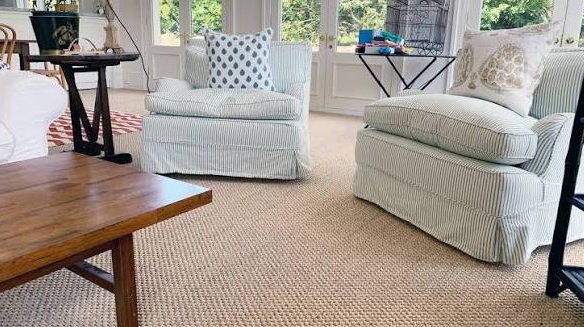
Melbourne’s weather has a reputation for doing several things in one afternoon. A still, mild morning can turn into a hot, gusty northerly, then collapse into a cool change with rain sweeping in from the south-west. Indoors, the swings continue: heaters run for months over winter, windows fog with condensation on cold mornings, and in summer the air can become very dry during heatwaves before humidity jumps again after a storm.
For most flooring, these fluctuations barely matter. For sisal carpet, they matter more than many buyers realise. Sisal is a plant fibre that absorbs and releases moisture from the air, which means it gently expands and contracts as indoor humidity changes. Understanding how that works, and how to plan for it, is the key to a successful sisal carpet installation in Melbourne. This article focuses on the practical, climate-related side of choosing, installing and living with wall-to-wall sisal in Victorian homes.
Why Climate Matters for a Natural Fibre Floor
Plant fibres are hygroscopic: they constantly exchange moisture with the surrounding air until they reach equilibrium. When the air is humid, sisal takes on moisture and swells slightly. When the air is dry, it gives moisture up and shrinks slightly. The latex backing and the installation method restrain most of this movement, but they cannot eliminate it entirely.
In practical terms, unmanaged movement can show up as small ripples or bubbles in a carpet that was laid in very dry conditions and then absorbed moisture, or as gaps at seams and edges in a carpet that was laid in humid conditions and later dried out. Good installers anticipate this, and their methods are designed around it.
Melbourne’s Indoor Climate Through the Year
Winter: heating and condensation
Melbourne winters are cool and frequently damp outside, but the inside of a heated home tells a different story. Ducted gas heating, reverse-cycle split systems and hydronic panels all warm the air, and warm air holds more moisture before reaching saturation, so relative humidity indoors can drop noticeably in heated rooms. At the same time, poorly insulated windows and external walls can collect condensation overnight, creating damp pockets in otherwise dry rooms.
For sisal carpet, this means two things. Floor vents from ducted heating blow warm, dry air straight across the carpet surface, which can dry and discolour the fibres around the vent over time. And areas next to windows that regularly stream with condensation can become damp enough to mark or distort the fibre.
Summer: dry heat and sudden humidity
Hot northerly winds bring very low humidity, and homes closed up against the heat with refrigerated cooling can become quite dry indoors. Then a southerly change or thunderstorm can push humidity up sharply. Rooms with large west-facing windows also expose carpet to intense afternoon sun, which gradually lightens natural fibres.
Regional variations around Melbourne
Conditions vary across the metropolitan area. Bayside and peninsula homes tend to experience more consistent coastal humidity. Homes in the Dandenong Ranges and other hills suburbs can be cooler and damper for long periods. Newer estates on the western and northern fringes can be warmer and drier in summer. None of these locations rules out sisal, but they influence how carefully you manage ventilation, heating and moisture.
Before Installation: Getting the Subfloor Right
A sisal carpet is only as good as the surface it is laid on. Because sisal is typically glued down, flaws in the subfloor are more likely to telegraph through the carpet than with a thick, cushioned synthetic carpet.
Timber floorboards
Many Melbourne period homes have original timber boards over a ventilated subfloor. These boards may be cupped, uneven or gapped, and they may move seasonally themselves. Installers generally prefer to lay a smooth, stable underlayment such as plywood or hardboard over old boards before gluing sisal down. This creates a flat, consistent surface and avoids gluing directly to boards that a future owner might want to restore.
Good subfloor ventilation also matters. A damp, poorly ventilated crawl space beneath a period home can push moisture up into the floor, which is not a good environment for any natural fibre.
Concrete slabs
Concrete is common in newer homes, townhouses and apartments. The critical issue here is moisture. A new slab can take many months to dry sufficiently, and even older slabs on ground can draw moisture from below if there is no effective vapour barrier. Professional installers usually test slab moisture before laying sisal and may apply a moisture-suppressing primer or levelling compound if needed.
Particleboard and existing floor coverings
Particleboard floors in many 1970s to 1990s homes can provide a reasonable base if they are flat and in good condition. Existing carpet should always be removed, and old adhesive residues or vinyl may need attention before sisal is laid.
Installation Methods for Sisal Carpet
Acclimatisation
Sisal carpet should be delivered and unrolled in the room where it will be installed and left to acclimatise, commonly for around 24 to 48 hours, before fitting. During this time, the home should be kept at normal living conditions, with heating or cooling used as it would be day to day. Installing sisal in a cold, unheated renovation site and then cranking up the heating once the family moves in is a recipe for movement.
Direct stick
The most common method for sisal is direct glue-down to a prepared subfloor using an adhesive recommended for natural fibres. This holds the carpet firmly in place, minimises movement and gives a crisp, tailored finish. The trade-off is a firmer feel underfoot and a more involved removal process in the future.
Double stick over underlay
In this method, a dense underlay is glued to the subfloor and the sisal is then glued to the underlay. It adds cushioning and some acoustic benefit while still restraining movement. It is a good option for homeowners who want a little more comfort, and it can help with sound transmission in apartments.
Stretch-fitted installations
Some sisal and wool–sisal blend products can be stretched over underlay on smooth-edge gripper strips, like conventional carpet. This is product-specific and is generally less common for pure sisal because of the fibre’s movement and stiffness. Always follow the manufacturer’s instructions.
Stairs, seams and edges
Sisal on stairs can look superb, but it requires an experienced installer and a tight weave that wraps cleanly around nosings. Seams need careful planning so the weave pattern matches and joins fall outside main traffic paths. At doorways, transitions to tiles or timber should be finished with appropriate trims so the carpet edge is protected.
Apartment considerations
In Victoria, many apartment buildings have owners corporation rules governing floor coverings and acoustic performance. Before installing sisal carpet in an apartment, check whether there are requirements for acoustic underlay or particular installation methods.
Living With Sisal Carpet in Melbourne
Once your sisal carpet is installed, a few climate-aware habits help it last.
Manage moisture at entries. Melbourne’s wet winters mean shoes carry in plenty of moisture. Place effective doormats outside and inside every external door, and consider a hard-floor landing zone inside the back door rather than running sisal right up to it.
Mind the heating vents. Avoid placing furniture or rugs over ducted heating vents, and consider vent deflectors to direct warm air away from the carpet surface. Keep an eye on the fibre around vents in the first winter.
Control condensation. Ventilate rooms briefly each morning in winter, wipe streaming windows, and use bathroom and kitchen exhaust fans to keep household humidity in check.
Moderate extreme humidity swings. You do not need to run a dehumidifier constantly, but in very damp periods or very dry heatwaves, using your heating or cooling sensibly helps keep the indoor environment reasonably stable.
Protect from strong sun. Blinds, curtains or UV-filtering window films help slow lightening in west- and north-facing rooms.
Clean dry. Vacuum regularly with suction only or with the brush roll raised. Deal with spills immediately by blotting with a dry cloth, and avoid steam cleaning or hot-water extraction, which can cause shrinkage and water marking. For deeper cleaning, use a professional experienced with natural fibres and dry cleaning methods.
Rooms That Suit Sisal Carpet in a Melbourne Home
Sisal carpet is generally well suited to living rooms, formal lounges, studies, bedrooms, upstairs landings and, with careful installation, stairs. It is best avoided in kitchens, bathrooms, laundries and any area directly exposed to outdoor moisture, such as a mudroom or the floor beside a frequently used back door.
In homes with young children or pets not yet house-trained, consider whether a more spill-tolerant fibre such as seagrass, or a bound rug that can be lifted and professionally cleaned, would be a more practical choice for the main family area.
Conclusion
Sisal carpet can perform beautifully in Melbourne homes, but it rewards a climate-aware approach. Because it responds to the humidity around it, the details that matter most are a properly prepared and dry subfloor, adequate acclimatisation, an installation method suited to the product and the room, and sensible habits around heating, condensation and entry moisture. Get those right, and the city’s famously changeable weather becomes a manageable consideration rather than a reason to rule sisal out.
For those planning a wall-to-wall project, Floorspace is a Melbourne-based natural fibre specialist that handles wall-to-wall sisal carpet installations for homes across Melbourne and surrounding suburbs, and can advise on weaves and installation methods suited to individual rooms.






Most Commented Posts