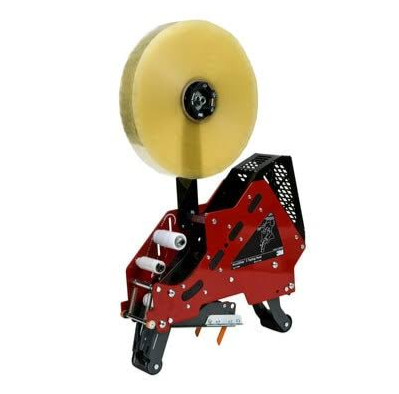
A case sealer is an important piece of equipment in many packaging operations because it closes filled cartons consistently before they move to storage, palletizing, or shipment. The term 3M taper is often used to describe equipment that applies pressure-sensitive carton-sealing tape to boxes. One well-known example is the 3M-Matic 700r random case sealer, which was designed to handle different carton dimensions while applying tape to the top and bottom center seams. 3M’s documentation identifies the 700r as a random case sealer with AccuGlide taping heads.
What Is a 3M Taper?
A 3M taper is essentially a carton-sealing machine that uses pressure-sensitive tape to close corrugated cases. Instead of requiring an operator to manually measure, cut, and apply tape, the machine uses mechanical components to transport the carton and apply tape along the designated seam.
The 3M-Matic 700r was specifically designed for regular slotted containers, commonly known as RSC cartons. Its taping system applies a continuous strip of pressure-sensitive tape across the top and bottom center seams as the carton passes through the machine.
This type of equipment is useful when packaging operations need repeatable carton closure without relying entirely on manual taping.
How Does a Random Case Sealer Work?
The basic operating sequence begins when a prepared carton enters the machine. Side drive belts grip the case and move it through the sealing area. The carton passes through the taping heads, which apply tape to the appropriate seams before the sealed case exits the machine.
Random case sealers are different from machines dedicated to one fixed carton size. The 700r was designed to automatically adjust for different case heights and widths within its specified operating range. This makes random sealing equipment useful in packaging environments where carton dimensions vary during production.
The general process includes:
- Carton entry: The filled and properly closed carton enters the conveyor system.
- Alignment: Drive belts maintain contact with the carton as it travels through the machine.
- Tape application: The taping heads apply pressure-sensitive tape over the center seam.
- Tape cutting: The taping mechanism cuts the tape at the appropriate point.
- Discharge: The sealed carton continues to the next packaging or logistics stage.
What Makes the 700r Suitable for Different Box Sizes?
A major feature of the 700r is its random-case capability. According to 3M documentation, the equipment automatically adjusts for case height and width. Depending on configuration and specifications, the machine can process multiple carton sizes without requiring the operator to manually reset every dimension.
The published specifications for the 700r include minimum carton dimensions of approximately 152 mm in length, 152 mm in width, and 121 mm in height, with maximum dimensions extending to approximately 546 mm in width and 622 mm in height under the listed configuration. The manufacturer’s documentation also indicates an operating rate of up to 19 cases per minute, depending on configuration and operating conditions.
Actual performance can vary according to carton dimensions, product weight, machine setup, tape characteristics, and production conditions.
Why Is the Taping Head Important?
The taping head is one of the most important components of a 3M taper because it controls how the adhesive tape is applied to the carton.
The AccuGlide system was designed to apply pressure-sensitive tape while reducing the impact applied to the carton. This is particularly relevant when sealing lightweight corrugated cases that could otherwise be distorted by excessive pressure during tape application.
A taping head typically includes mechanisms that guide, press, and cut the tape. Regular inspection of these components can help identify worn rollers, cutting blades, springs, or other parts before they contribute to inconsistent sealing.
What Maintenance Does a Case Sealer Require?
Routine maintenance is essential for keeping carton-sealing equipment operating consistently. The 700r service documentation includes maintenance procedures covering cleaning, lubrication, drive-belt replacement, taping-head adjustments, and knife replacement.
Operators should follow the equipment’s specific maintenance instructions rather than relying on generic procedures. Common maintenance considerations include:
- Keeping drive belts clean and correctly tensioned
- Inspecting tape rollers for wear
- Checking cutting mechanisms
- Removing accumulated dust and adhesive residue
- Inspecting pneumatic connections where applicable
- Checking fasteners and adjustment points
- Keeping recommended replacement parts available
The equipment manual specifically recommends maintaining certain spare parts because some components experience normal wear during operation.
How Should Replacement Parts Be Selected?
Replacement components should match the specific machine model, configuration, and taping-head assembly. Using the wrong component can affect machine alignment, tape application, or overall operating performance.
This is where documentation becomes particularly valuable. Parts drawings, manuals, machine serial numbers, and component identification information can help maintenance teams determine which replacement parts are appropriate.
A reliable machine parts manufacturer or parts supplier can also be useful when maintenance teams need accurate component identification and technical information. However, compatibility should always be verified against the equipment documentation before ordering or installing a replacement component.
What Are the Benefits of Automated Case Taping?
Automated case taping can provide several operational advantages. Consistent tape placement can create more uniform carton closures, while conveyor-driven movement can reduce repetitive manual handling.
Random adjustment is particularly useful for facilities that process several carton sizes. Rather than dedicating a separate machine to every box dimension, a properly configured random case sealer can accommodate a range of cases within its specified limits.
Automation can also make packaging processes easier to integrate with other equipment, such as conveyors, labeling systems, weighing stations, and palletizing operations.
Conclusion
A 3M taper is more than a tape dispenser; it is a coordinated packaging machine that transports cartons, aligns them, applies pressure-sensitive tape, and prepares sealed cases for downstream handling. The 3M-Matic 700r demonstrates how random case-sealing technology can accommodate varying carton dimensions while maintaining a consistent sealing process. In the middle of ongoing equipment maintenance, working with a reliable machine parts manufacturer can help ensure that replacement components are identified correctly and matched to the relevant equipment specifications. For maintenance teams, understanding the taping head, drive system, adjustment mechanisms, and replacement requirements is equally important.




Most Commented Posts