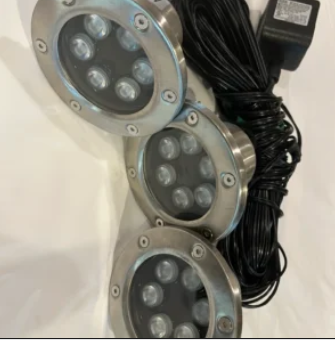
A pond fountain changes character after sunset. During daylight, moving water reflects the sky and surrounding landscape. At night, carefully positioned illumination reveals individual streams, creates depth, and gives the water feature a different presence. The challenge is achieving that effect without excessive brightness, awkward glare, or unnecessary maintenance.
Choosing water fountain LED lights involves more than selecting a color. Fixture placement, electrical compatibility, spray patterns, and the surrounding environment all affect how the finished display looks. A thoughtful lighting plan begins with the water itself. It also considers how the pond is used in the evenings.
Read the Spray Pattern Before Choosing Fixtures
Imagine two fountains operating in neighboring ponds. One produces a tall central plume; the other creates a broad, low spray. Even with identical fixtures, the illuminated results will differ.
A tall plume may benefit from beams directed toward its central rise. A wider pattern may need several lights positioned to illuminate separate arcs. Uneven coverage can leave parts of the spray invisible while other sections appear overly bright.
Observe the fountain from the places where people actually gather: a patio, pathway, or seating area. Those viewing angles matter more than how the equipment looks from the shoreline during installation.
White Light or Color-Changing Effects?
White illumination offers a restrained appearance and can complement gardens, natural stone, and traditional landscapes. Color-changing systems introduce flexibility for events or seasonal displays, although constant color transitions may feel distracting in quiet settings.
Before purchasing water fountain LED lights, consider whether the objective is subtle evening visibility or a prominent visual centerpiece. The answer can guide brightness, fixture quantity, and control choices.
A timer is often more useful than another decorative setting. Limiting operation to the hours when the display is enjoyed can reduce unnecessary illumination and energy use.
Check Compatibility Before Installation
Not every lighting kit fits every fountain. Mounting brackets, cable connections, power supplies, and control systems can vary between models.
Some pond lighting systems use low-voltage power, but the exact requirements depend on the manufacturer. Never assume that matching connector shapes indicate electrical compatibility.
Verify the following details before ordering:
- Approved fountain models and mounting arrangements.
- Required voltage, transformer, and controller.
- Cable length and route to the power source.
- Water exposure rating and installation instructions.
- Replacement availability for individual fixtures.
For a fountain installed on the water, cable routing must also account for movement caused by wind and changing water levels. Cables should not interfere with anchoring lines, moving assemblies, or routine retrieval.
Avoid Three Common Lighting Mistakes
Aiming directly at viewers. Poorly directed fixtures can create glare rather than illuminate the water. Adjust placement so the spray catches the light without exposing bright sources unnecessarily.
Ignoring nearby surroundings. Light can reach bedroom windows, neighboring properties, or wildlife habitat. Lower intensity and shorter operating periods may provide a better balance.
Forgetting future maintenance. Algae, mineral deposits, and debris can reduce clarity. Select equipment that can be accessed safely for inspection and cleaning.
These issues are easier to address before the fountain is anchored than after a lighting system has been installed.
Build a Simple Evening Test
Once the system is installed according to manufacturer guidance, evaluate it after dark. View the fountain from several angles and note whether the water appears evenly illuminated.
Check for excessive spill light, reflections that obscure the spray, and cables exposed above the surface. Make only adjustments permitted by the instructions, and disconnect electrical power before servicing equipment.
Photographs can help compare settings, but judge the final result with your eyes. Camera exposure often makes illuminated water appear brighter than it actually looks.
Conclusion: Let the Water Lead
An effective nighttime fountain display highlights movement without overwhelming the surrounding landscape. The best arrangement responds to spray shape, viewing distance, and practical maintenance needs. When selecting water fountain LED lights, prioritize compatibility and controlled illumination over the largest possible number of effects. For a floating pond fountain, the lighting should complement the moving display rather than compete with it. A carefully lit pond can feel inviting and distinctive while remaining comfortable for nearby people and wildlife.





Most Commented Posts