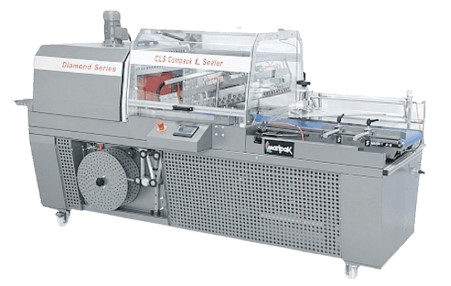
Shrink packaging is widely used to protect products, create multipacks, improve handling, and provide a clean outer finish. The process combines specially formulated shrink film with controlled sealing and heat. A shrink film machine helps automate these steps, allowing businesses to package products more consistently and efficiently.
The equipment used for shrink packaging varies significantly. Some systems are designed for smaller production runs, while others are built into continuous automated packaging lines. Choosing the appropriate equipment therefore requires an understanding of film types, product dimensions, production volume, sealing methods, and heat-shrinking requirements.
What Is a Shrink Film Machine?
A shrink film machine is packaging equipment designed to wrap products in heat-sensitive plastic film and then shrink that film around the product. Depending on the machine configuration, wrapping, sealing, and shrinking can occur as separate stages or within a combined system.
In a typical process, film is positioned around the product and sealed to create an enclosed package. The package then passes through a heat tunnel or chamber, where controlled heat causes the film to contract. The film conforms more closely to the product’s shape, producing a compact outer package.
The equipment can be used for individual products, grouped products, retail packages, and certain industrial applications. The machine’s configuration should match the size, shape, weight, and required production rate of the products being packaged.
How Does Shrink Film Packaging Work?
Shrink packaging generally involves three important elements: film, sealing equipment, and a heat source.
First, the appropriate film is positioned around the product. A sealing system then cuts and closes the film to create the package. Depending on the equipment, this may involve an L-sealer, side sealer, or another sealing configuration.
After sealing, the package enters a heat tunnel or chamber. Controlled hot air transfers heat to the film, activating its shrink properties. As the film contracts, it conforms to the product and creates the finished package.
Temperature, airflow, conveyor speed, film thickness, and product dimensions all influence the final result. Incorrect settings can contribute to wrinkles, incomplete shrinking, poor seals, or excessive heat exposure.
What Types of Shrink Film Are Used?
Several types of shrink film are available, with polyolefin (POF), polyethylene (PE), and PVC among commonly used materials. Their properties differ in areas such as clarity, strength, shrink behaviour, and application suitability.
POF is frequently selected for applications where clarity, appearance, sealing performance, and versatility are important. PE is often used for heavier-duty bundling applications because of its strength and suitability for larger packages. PVC has also been used in various retail packaging applications.
Film thickness is another important consideration. Thinner films may be suitable for lightweight products, while thicker materials can be appropriate when greater durability or load stability is required. The film must also be compatible with the selected sealing and heating equipment.
What Is a POF Shrink Film Machine?
A POF shrink film machine is packaging equipment configured to work with polyolefin shrink film. POF film is commonly used for retail and consumer-product packaging because it can provide a clear, neat finish while offering useful puncture resistance and sealing characteristics.
However, selecting equipment for POF film requires more than simply checking whether a machine can run the material. Film thickness, roll dimensions, product size, sealing area, and heat requirements should all be considered.
For example, some L-sealer systems are specifically designed to accommodate POF film within defined thickness ranges. Current equipment specifications demonstrate that machine compatibility can vary according to the particular model and configuration.
L-Sealers and Side Sealers
L-sealers use an L-shaped sealing bar to cut and seal film around a product. They can be suitable for applications involving individual products and varying package sizes, particularly when production requirements are moderate.
Side sealers use a different sealing arrangement and are commonly associated with continuous packaging processes. They can be useful where production volume and product flow require a more automated approach.
The choice between these systems should be based on product dimensions, desired throughput, film characteristics, and how the machine will integrate with other packaging equipment.
The Role of a Heat Shrink Tunnel
A heat tunnel is responsible for applying controlled heat after the film has been sealed around the product. It is an important part of many continuous shrink packaging systems.
A tunnel needs to provide consistent heat distribution while allowing the package enough time inside the heated area to shrink properly. Conveyor speed and temperature therefore need to work together.
Modern tunnel designs can include adjustable conveying speeds and systems intended to improve heat distribution. Some equipment is also designed to accommodate multiple film types, including POF and PE, which can provide greater flexibility when packaging requirements change.
Factors to Consider Before Choosing Equipment
Businesses should evaluate their packaging requirements before purchasing a shrink film machine. Product dimensions are among the first considerations because they determine the required sealing area, film width, tunnel size, and conveyor capacity.
Production volume is equally important. Manual systems may be adequate for low-volume operations, while semi-automatic equipment can provide greater consistency as demand increases. High-volume operations may benefit from fully automated systems with integrated product feeding and conveying.
Other factors include available floor space, film type, film thickness, electrical requirements, operator access, maintenance needs, and compatibility with existing packaging lines.
Future production requirements should also be considered. Equipment that meets current output may become restrictive if product volumes increase substantially.
How Can Packaging Quality Be Improved?
Consistent packaging depends on maintaining suitable machine settings. Film tension, sealing temperature, tunnel temperature, airflow, and conveyor speed should be adjusted according to the material and product.
Regular inspection of seals can identify problems before they affect a larger production run. Operators should also monitor film tracking and package positioning because inconsistent product placement can lead to uneven seals or wrinkles.
Film should be stored appropriately before use. Exposure to unsuitable environmental conditions can affect material performance and may influence shrink behaviour and appearance.
Routine maintenance is equally important. Keeping sealing components, conveyors, heating systems, and other machine parts in suitable operating condition can help maintain consistent packaging performance.
Conclusion
A shrink film machine can streamline the process of wrapping, sealing, and shrinking products while helping businesses achieve more consistent packaging results. The right system depends on the product, film material, package dimensions, production volume, and desired level of automation. For applications using polyolefin film, a POF shrink film machine should be selected based on both film compatibility and the complete packaging process. Sealing capacity, heat control, tunnel dimensions, conveyor speed, and film specifications should all be evaluated before equipment is selected.





Most Commented Posts