
Graduation is a significant milestone that brings together formal ceremonies, photographs, family gatherings, and celebrations. Choosing an outfit for the occasion involves balancing personal style with comfort, venue expectations, and practical considerations. The right graduation dresses for women should offer a comfortable fit, allow easy movement, and complement the formality of the event. From classic A-line silhouettes to elegant midi styles, understanding dress lengths, fabric choices, and neckline options can help graduates select an outfit that feels appropriate throughout the day without sacrificing individuality.
Choosing the Right Dress Silhouette for Graduation
A dress silhouette influences comfort, movement, and how an outfit looks beneath a graduation gown. Considering the ceremony’s duration and setting can help narrow down suitable options.
A-line dresses: Graduation dresses for women have a fitted upper portion and a skirt that gradually widens from the waist. Their balanced shape allows comfortable movement and offers a timeless appearance. They can work well for formal ceremonies, outdoor celebrations, and graduation portraits.
Fit-and-flare dresses: Featuring a defined waist and a more noticeable skirt flare, this silhouette creates a structured yet playful appearance. Graduates should check the skirt volume to ensure it does not feel bulky beneath their academic gown.
Selecting Comfortable Fabrics for Long Ceremonies
Fabric selection is particularly important when a graduation ceremony involves several hours of sitting, standing, and walking. Graduation dresses for women can add another layer of warmth, making lightweight materials worth considering.
Cotton blends can feel comfortable in warmer weather, particularly when the fabric allows airflow. Linen blends also offer a relaxed texture, although some varieties wrinkle more easily during prolonged sitting.
Finding the Best Dress Length and Neckline
Dress length affects both appearance and practicality. Mini, knee-length, midi, and maxi styles can all suit graduation events, depending on the dress code and personal preferences.
Knee-length dresses offer a balanced option for formal ceremonies and casual celebrations. Midi dresses provide additional coverage while maintaining a polished appearance. Maxi dresses can create an elegant look, but the hem should not interfere with walking, climbing stairs, or crossing the stage.
Necklines also deserve attention because the upper portion of a dress may remain visible above the graduation gown. Square, scoop, boat, and moderate V-neck designs can complement different personal styles without introducing unnecessary bulk.
Sleeve length should reflect the weather, venue, and desired coverage. Short sleeves and sleeveless styles may suit warm outdoor ceremonies, while three-quarter or long sleeves can work well in cooler settings.
Before graduation day, try the complete outfit with the gown, shoes, and accessories. This simple check helps identify bunching, uncomfortable seams, or visible straps.
Styling Colors, Prints, and Accessories Thoughtfully
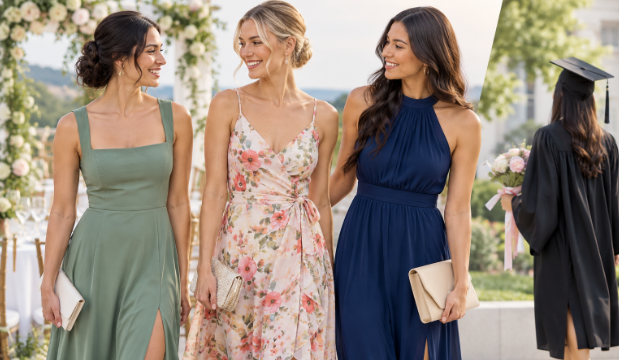
Color and pattern can help express personality while keeping the outfit suitable for a formal milestone. White, ivory, navy, pastel shades, and deeper jewel tones offer different styling possibilities, but school dress codes and personal preferences should guide the decision.
The graduation gown should also be considered when selecting prints. Contrasting colors may make the outfit more visible in photographs, while coordinating shades can create a more understated effect.
Accessories can complete the look without competing with the dress. Simple earrings, a delicate necklace, or a compact handbag may provide enough detail. Footwear should be chosen according to the venue: block heels, wedges, dressy flats, or low heels can be more practical than narrow stilettos on grass, gravel, or uneven pathways.
Practical Tips for a Graduation-Ready Outfit
A successful graduation outfit should accommodate the day’s activities rather than simply look appealing on a hanger.
Consider these preparation tips:
- Check the dress code: Review school or university guidance before choosing the outfit.
- Test the fit: Sit, stand, bend, and walk in the dress to assess comfort and coverage.
- Inspect transparency: Check light-colored fabrics in bright daylight and under strong indoor lighting.
- Prepare for weather: Consider a lightweight layer for air-conditioned halls or changing outdoor temperatures.
- Choose practical footwear: Account for stairs, long walking distances, and the ceremony’s seating arrangements.
- Plan outfit care: Steam or iron the dress according to its care label and transport it carefully to avoid wrinkles.
Graduation attendees who are family members or guests should also consider the event’s dress expectations. Polished dresses, coordinated separates, and comfortable formal-casual outfits can all be appropriate depending on the occasion.
Conclusion
Selecting a graduation outfit becomes easier when comfort, silhouette, fabric, and event requirements are considered together. A well-fitting dress should allow unrestricted movement, work comfortably beneath an academic gown, and suit the ceremony’s setting. Thoughtful color coordination and practical accessories can further create an outfit that feels personal and occasion-appropriate. Graduates exploring different styles can also consider how floral pattern dresses complement spring ceremonies, outdoor portraits, and post-ceremony celebrations. Ultimately, the most suitable choice is one that reflects individual taste while providing the comfort and confidence needed to enjoy this memorable milestone.



Most Commented Posts