
A throw blanket is more than an extra layer for chilly evenings. It can add color, texture, comfort, and visual interest to a room without requiring major changes to the furniture or décor. Among different color options, blue is particularly versatile because it can work with neutral, warm, cool, modern, coastal, and traditional interiors.
A blue throw blanket can serve both a practical and decorative purpose. Depending on its material, thickness, and construction, it may provide additional warmth while also becoming an accent piece on a sofa, bed, reading chair, or bench. Blue is also available in a wide range of shades, from pale blue and dusty blue to navy and deeper tones, making it easier to coordinate with an existing color palette.
What Makes a Blue Throw Blanket a Good Decorating Choice?
Color is one of the simplest ways to change the visual character of a room. Blue is commonly associated with calmness and relaxation, which makes it suitable for bedrooms, living rooms, and other spaces designed for comfort. Lighter shades can create an airy appearance, while darker blues can provide contrast and visual depth.
A blue throw blanket can also help connect different elements in a room. For example, a blue throw can echo the color of cushions, artwork, rugs, curtains, or smaller decorative accessories. This creates repetition within the room without requiring every item to match exactly.
Texture is equally important. A knitted, woven, fleece, faux-fur, or plush throw can produce a different visual effect even when the color remains the same.
Where Can You Use a Blue Throw Blanket?
One of the main advantages of a blue throw blanket is its versatility. It can be used in several areas of the home.
Living Room
Drape a throw over the arm or back of a sofa for an informal appearance, or fold it neatly across the seat for a more structured look. Throw blankets can introduce both warmth and texture while making a seating area feel more finished.
Bedroom
A folded throw at the foot of a bed can add another layer to the bedding arrangement. It can also introduce a contrasting shade without changing the main duvet or bedspread. Layering bedding and soft textiles is a commonly used approach for creating a comfortable, finished bedroom.
Reading Corner
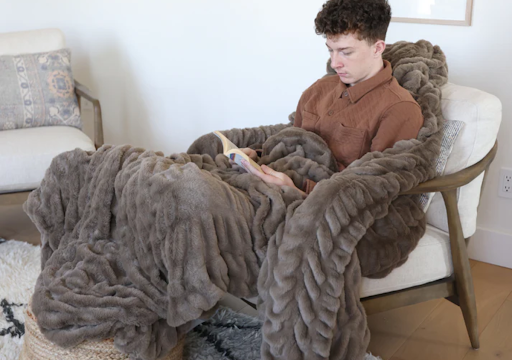
A chair paired with a soft throw can create a practical reading or relaxation area. Keeping the blanket within reach also makes it easy to use rather than treating it solely as decoration.
Guest Room
A carefully placed throw can provide an additional layer for guests while making the room appear more welcoming. A medium-weight option can be particularly useful when temperatures vary throughout the year.
How Do You Choose the Right Material?
Material affects warmth, softness, weight, breathability, durability, and maintenance. Polyester throws, for example, can be lightweight, durable, and relatively easy to wash. Some polyester throws are also produced from recycled materials.
Cotton is another common option and can provide a softer, more breathable feel. Wool generally provides substantial warmth, while fleece and plush materials are often selected when softness and coziness are priorities.
When choosing a blue throw blanket, consider how and where it will be used rather than selecting material based only on appearance. A decorative throw for a sofa may have different requirements from a blanket intended for regular nighttime use.
How Should You Style a Blue Throw Blanket?
Styling depends on the room’s existing colors and furniture. A blue throw can be paired with neutral shades such as white, cream, beige, gray, or natural wood tones. Complementary colors can also be introduced through cushions and accessories.
For a simple living-room arrangement, fold the throw lengthwise and place it over one side of the sofa. For a relaxed appearance, allow it to fall naturally over the arm. On a bed, fold it across the bottom third to create a layered effect. These approaches add texture while keeping the blanket accessible for everyday use.
The texture of the blanket can also be used to create contrast. For example, a smooth sofa can benefit visually from a chunky knit or plush throw, while heavily textured furniture may work better with a simpler textile.
What Should You Consider Before Buying?
Before choosing a blue throw blanket, consider five factors: size, material, warmth, care requirements, and color.
Size determines whether the blanket works primarily as a personal throw or as a decorative layer across furniture. Material affects comfort and maintenance. Warmth should correspond to the season and intended use. Care instructions are especially important if the blanket will be washed frequently.
Color should also be considered in relation to the rest of the room. A pale blue can create a softer appearance, while navy or another deep blue can act as a stronger accent.
Conclusion
A blue throw blanket can combine comfort, practical warmth, color, and texture in one relatively simple home accessory. Its versatility allows it to work across living rooms, bedrooms, guest spaces, and reading areas, while different shades and materials provide flexibility for different decorating styles. When selecting one, consider the room’s existing palette, the desired level of warmth, the material, size, texture, and care requirements. Choosing these features based on how the blanket will actually be used can help ensure that it remains both attractive and functional. A fluffy blanket can be particularly appropriate when softness and coziness are the main priorities, while lighter or more structured materials may suit warmer conditions or decorative applications.




Most Commented Posts