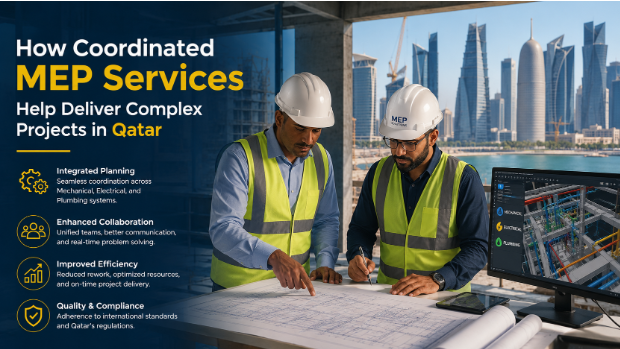
Picture a high-rise tower nearing completion when the electrical team discovers the ductwork installed weeks earlier is sitting exactly where a major cable run needs to go. Now walls need to be opened back up, schedules slip, and costs climb not because anyone did sloppy work, but because the mechanical, electrical, and plumbing teams were never properly working from the same plan. This kind of clash happens far more often than clients realize, which is exactly why properly Coordinated MEP Services in Qatar have become such a critical part of delivering large, complex projects without the delays and budget overruns that come from disconnected planning.
Qatar’s construction landscape right now is ambitious towers, mixed-use developments, infrastructure tied to national growth strategies, all moving at a pace that leaves little room for the kind of rework that disorganized MEP planning tends to cause.
What MEP Coordination Actually Means
MEP stands for mechanical, electrical, and plumbing the systems that make a building actually function once construction is complete. Air conditioning, ventilation, power distribution, lighting, fire safety systems, water supply, and drainage all fall under this umbrella, and each discipline typically involves separate specialist teams working with their own drawings and schedules.
Coordination means ensuring all of these systems are planned together from the start, so that ductwork doesn’t collide with structural beams, electrical conduits don’t fight for the same ceiling space as plumbing lines, and every system has a clear, conflict-free path through the building before construction ever begins. Without this coordination, these conflicts don’t disappear they just get discovered later, usually on-site, where fixing them costs far more time and money than catching them on paper would have.
Why This Matters More on Complex Projects
Simple, small-scale buildings can sometimes get away with looser coordination, since there’s less complexity for systems to collide within. Large, complex projects don’t have that luxury. High-rise towers, hospitals, hotels, and mixed-use developments pack an enormous density of mechanical, electrical, and plumbing systems into limited physical space, often across dozens of floors with different requirements at each level.
Qatar’s rapid development pace adds another layer of pressure. Many major projects operate on tight timelines tied to broader national milestones, leaving little room for the delays that uncoordinated MEP work tends to introduce. A clash discovered during construction doesn’t just cost money to fix it can push back an entire project schedule, affecting every other contractor and trade waiting on that stage of work to finish.
The Real Risks of Poor MEP Coordination
1. Costly Rework and Delays
The most obvious consequence is physical rework walls, ceilings, and floors opened back up to correct conflicts that better planning would have caught. This isn’t just expensive; it often creates a domino effect, delaying every subsequent phase of construction that depends on that area being finished.
2. Compromised System Performance
Even when conflicts don’t force visible rework, poor coordination can result in systems that technically function but perform below their potential ventilation that doesn’t circulate as efficiently as designed, electrical systems with unnecessarily long or awkward routing, or plumbing systems more prone to future maintenance issues because of compromised installation.
3. Safety and Compliance Risks
Fire safety systems, emergency power, and ventilation all need to meet strict regulatory standards, and poor coordination increases the risk of installations that technically pass individual inspections but don’t work together as effectively as intended during an actual emergency.
4. Budget Overruns That Erode Trust
Clients notice when projects run over budget, and MEP-related rework is one of the more common, entirely avoidable causes. Consistent overruns damage relationships between clients and contractors, making future project collaboration harder to secure.
How Proper Coordination Actually Works
1. Early Integration of All Disciplines
Coordination needs to start at the design stage, not after construction begins. Mechanical, electrical, and plumbing teams reviewing plans together early rather than working in isolated silos catches the vast majority of potential conflicts before they ever become physical problems on-site.
2. Building Information Modeling for Clash Detection
Modern MEP coordination increasingly relies on detailed 3D modeling that allows teams to visualize exactly how mechanical, electrical, and plumbing systems will physically occupy the same spaces. This technology catches spatial conflicts on screen, where they cost nothing to fix, rather than on-site, where they cost considerably more.
3. Clear Communication Channels Across Trades
Even with strong technical planning, coordination depends heavily on communication. Regular coordination meetings between disciplines, clear documentation of decisions, and a shared understanding of how changes in one system affect the others all prevent the kind of miscommunication that leads to conflicts slipping through.
4. Phased Verification Throughout Construction
Coordination doesn’t end once construction starts. Ongoing verification throughout the build checking that installed systems match coordinated plans catches any deviations early, before they compound into larger problems affecting multiple trades.
The Bigger Picture: Infrastructure Supporting National Growth
This kind of disciplined coordination isn’t just about individual buildings it plays directly into the broader infrastructure ambitions shaping the country. Powering Qatar’s Smart City Projects depends heavily on exactly this kind of precise, well-coordinated MEP work, since smart infrastructure requires mechanical, electrical, and plumbing systems that integrate seamlessly with the sensors, automation, and connected technology defining these developments. Poor coordination at the MEP level undermines the sophisticated technology layered on top of it, no matter how advanced that technology is on its own.
Choosing the Right MEP Partner
Given the stakes involved, selecting an MEP partner isn’t a decision to make lightly. Experience with projects of similar scale and complexity matters significantly, as does a proven track record of using modern coordination tools like 3D modeling rather than relying purely on traditional 2D drawings that make clash detection far harder. Clear communication practices and a genuine willingness to collaborate closely with other trades rather than working in isolation and hoping everything fits together at the end separate contractors who deliver smoothly from those who consistently generate costly surprises.
Final Thoughts
Complex construction projects in Qatar are only getting more ambitious, and the margin for error created by poor MEP coordination keeps shrinking as timelines tighten and building systems grow more sophisticated. Properly coordinated MEP work isn’t a nice-to-have on projects of this scale it’s foundational to delivering buildings on time, on budget, and built to actually perform the way they were designed to.
The projects succeeding in Qatar’s fast-moving development landscape aren’t necessarily the ones with the biggest budgets. They’re the ones where mechanical, electrical, and plumbing teams worked from the same coordinated plan from day one, instead of discovering conflicts the hard way once construction was already underway.






Most Commented Posts