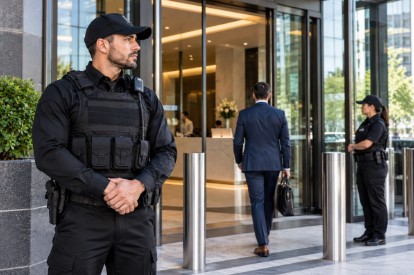
Business security involves more than locking doors and installing surveillance equipment. Offices, residential buildings, warehouses, retail locations, and construction sites face different challenges depending on their surroundings, operating hours, visitor activity, and the value of the assets they contain. Unauthorized access, theft, vandalism, workplace conflicts, and emergencies can disrupt daily operations and create risks for employees, customers, and visitors.
A structured security plan helps organizations identify these vulnerabilities and establish procedures to address them. On site security services can contribute to this process by placing trained personnel at designated locations to monitor activity, manage access, observe potential concerns, and coordinate appropriate responses. Their responsibilities can be tailored to the property, allowing businesses to establish safeguards that reflect their specific operational requirements.
Understanding how on-site personnel work, which qualifications matter, and when additional security measures may be appropriate can help organizations make informed decisions about protecting their premises.
What Are On-Site Security Services?
On-site security refers to the deployment of security personnel at a specific property or facility for an agreed period. Depending on the assignment, personnel may work at reception areas, building entrances, loading zones, parking facilities, or other locations that require supervision.
Unlike security measures that rely exclusively on cameras or alarms, on-site personnel can observe situations directly, communicate with people, and follow established procedures when concerns arise.
Common responsibilities include:
- Checking visitor identification and maintaining entry records.
- Monitoring designated entrances and restricted areas.
- Conducting authorized property patrols.
- Observing and reporting suspicious activity.
- Supporting emergency evacuation procedures.
- Documenting incidents and communicating with management.
- Helping enforce established access and visitor policies.
The precise duties depend on the site’s requirements, the security agreement, and applicable law. Guards should understand their authority and know when an incident requires assistance from emergency responders or law enforcement.
Why Businesses Need On-Site Security
Different properties experience different security challenges. A retail store may need assistance with loss prevention and customer safety, while an office building may prioritize visitor management and restricted access. Industrial facilities may have additional concerns involving equipment, deliveries, and hazardous work areas.
Preventing Unauthorized Access
Controlling who enters a property is a fundamental part of security. Visitors, contractors, delivery personnel, and employees may need different levels of access depending on their responsibilities.
Security personnel can verify authorization, direct visitors to the appropriate locations, and report attempts to enter restricted areas. Clear procedures reduce confusion and help businesses maintain better oversight of their premises.
Reducing Theft and Property Damage
Visible security personnel may deter some opportunistic misconduct, although no security measure can guarantee that theft or vandalism will not occur. Routine observation, accurate incident reporting, and consistent access procedures can help organizations identify vulnerabilities and respond to recurring problems.
Supporting Employee and Visitor Safety
Employees and visitors benefit from clear reporting channels and organized emergency procedures. Security personnel can help communicate instructions during evacuations, report hazards, and contact appropriate responders when incidents occur.
Their presence should complement, rather than replace, workplace safety policies, fire protection systems, and emergency planning.
Maintaining Operational Continuity
Security incidents can interrupt deliveries, delay work, damage equipment, and require management attention. By helping monitor activity and communicate concerns promptly, on-site personnel can support smoother daily operations and reduce avoidable disruption.
How to Choose the Right Level of Security for a Property
The appropriate security arrangement begins with an assessment of the property’s layout, activities, operating hours, and known vulnerabilities.
Businesses should consider the number of entrances, the frequency of visitor traffic, the presence of valuable equipment, the availability of lighting, and the effectiveness of existing access controls. Previous incidents and the surrounding environment may also influence the assessment.
For some facilities, a receptionist trained in visitor procedures and an effective access-control system may address many routine concerns. Other locations may require dedicated guards, regular patrols, or additional emergency procedures.
The goal is to select safeguards that are proportionate to the risks rather than automatically choosing the most intensive option. Organizations should also review their arrangements whenever the property changes, operating hours expand, or new security concerns emerge.
What Qualifications Should Security Guards Have?
The quality of a security arrangement depends heavily on the training, professionalism, and reliability of the personnel assigned to the property. Businesses should verify that guards meet applicable registration requirements and possess the skills necessary for their responsibilities.
In New York State, security guards generally must register with the Department of State and complete required training unless an exemption applies. Initial training includes an eight-hour pre-assignment course and 16 hours of on-the-job training within 90 days of employment. Armed personnel must also meet additional firearms training and registration requirements.
Beyond formal qualifications, businesses should assess communication skills, punctuality, situational awareness, incident reporting, and familiarity with emergency procedures. Guards must understand the boundaries of their authority and follow workplace policies consistently.
When evaluating on site security services, organizations should ask how personnel are supervised, how incidents are documented, and how coverage is maintained when a guard is absent. These practical considerations can be just as important as the initial selection process.
When Are Armed Guards Appropriate?
Some properties may face credible threats or operational risks that justify considering personnel authorized to carry firearms. However, an armed assignment is not automatically necessary for every business, and the decision should follow a careful risk assessment.
Factors to consider include the nature of the threat, the property’s environment, the responsibilities of the personnel, and the potential consequences of introducing firearms into the workplace.
Businesses considering armed guards should verify the required credentials, firearms qualifications, and legal authorization. They should also confirm that the security provider has clear policies governing emergency response, safe conduct, incident reporting, and coordination with law enforcement.
For many locations, access control, adequate lighting, visitor screening, surveillance, and trained unarmed personnel may provide appropriate safeguards. The most suitable approach depends on the actual risks and should be reviewed periodically.
How Technology Complements On-Site Security
Technology can help security personnel monitor a property and maintain accurate records. Cameras, electronic access systems, visitor-management software, alarms, and communication devices each serve different purposes.
For example, an access-control system can help restrict entry to authorized personnel, while cameras may provide information about an incident that needs further investigation. Security staff can observe relevant alerts, verify information where appropriate, and follow the property’s response procedures.
Technology should not be treated as a complete substitute for human judgment. Equipment can malfunction, alerts may require verification, and some situations demand direct communication or assistance from emergency responders.
A balanced plan combines appropriate technology with trained personnel, clear responsibilities, and regular reviews. Businesses should also consider privacy, data retention, and who is authorized to access security records.
How to Evaluate a Security Provider
Selecting a security provider requires more than comparing staffing numbers or hourly rates. Organizations should assess whether the proposed arrangement addresses their specific needs and whether the provider can demonstrate consistent professional standards.
Important considerations include:
- Licensing and compliance: Verify relevant registrations, credentials, and insurance.
- Site-specific planning: Ensure the provider understands the property’s layout and operating requirements.
- Training and supervision: Ask how personnel are prepared for their duties and supported during assignments.
- Incident procedures: Confirm how emergencies, complaints, and unusual events are reported.
- Communication: Establish who receives updates and how urgent concerns are escalated.
- Performance reviews: Agree on how coverage, service quality, and recurring issues will be evaluated.
Clear expectations help businesses assess whether their security arrangements remain effective over time.
Conclusion
Protecting a business requires a coordinated approach that combines risk assessment, access management, trained personnel, and practical emergency procedures. A well-designed plan should reflect the property’s layout, operating environment, visitor activity, and specific vulnerabilities rather than relying on a single security measure. When assessing on site security services, businesses should prioritize professional qualifications, clear communication, reliable supervision, and procedures that address foreseeable risks. Where the circumstances warrant additional precautions, the appropriate use of armed guards may form part of a broader security strategy, provided all applicable legal and training requirements are met. Ultimately, effective property security is an ongoing responsibility. Regular reviews, accurate incident records, appropriate technology, and consistent staff training help organizations adapt to changing conditions and maintain a safer environment for employees, visitors, and business operations.



Most Commented Posts