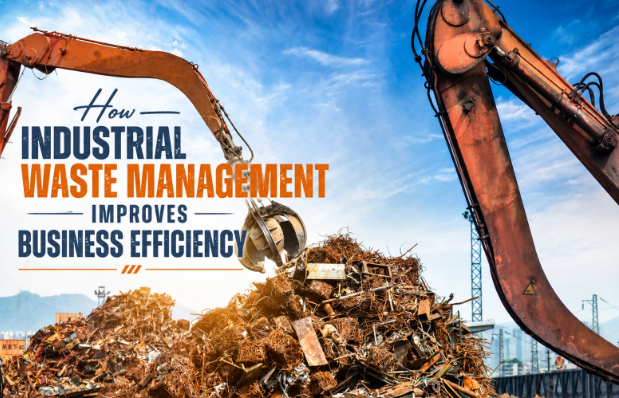
Commercial and industrial facilities can generate substantial amounts of cardboard, plastics, metals, timber, packaging, organics, manufacturing offcuts, and other discarded materials. Without an organised system, these materials can consume valuable floor space, increase handling requirements, raise disposal costs, and reduce recycling opportunities. Effective industrial waste management provides a structured way to identify waste streams, separate recoverable materials, improve storage, and make collection more efficient. Rather than treating waste solely as something to remove, businesses can view it as an operational issue that affects productivity, workplace organisation, environmental performance, and resource use.
What Is Industrial Waste Management?
Industrial waste management refers to the processes used to minimise, separate, store, handle, recycle, recover, transport, and appropriately dispose of waste generated through commercial or industrial activities.
The exact waste stream varies considerably between industries. Warehouses may generate large amounts of cardboard and plastic film, while manufacturing plants may produce metal offcuts, timber, plastics, packaging, or specialised production waste. Hospitality and food-processing facilities can also generate significant quantities of organic material.
The NSW Environment Protection Authority advises commercial and industrial premises to consider waste management during both facility design and everyday operations. Effective systems can improve recycling efficiency, reduce contamination, and increase the quality and quantity of recoverable materials.
Why Should Businesses Conduct a Waste Audit?
A waste audit provides a clear picture of what a business is throwing away and how frequently different materials are generated.
Instead of selecting bins or machinery first, organisations can examine:
- Types of waste produced
- Approximate volumes and weights
- Where waste originates
- How materials are currently stored
- Contamination within recycling streams
- Collection frequency
- Materials that could potentially be reused or recycled
This information helps identify opportunities that might otherwise be overlooked. For example, a business may discover that recyclable cardboard occupies a significant percentage of general waste bins or that large quantities of plastic packaging could be separated more effectively.
Recent NSW EPA commercial and industrial waste audit findings show that significant recoverable material can still enter landfill waste streams, highlighting the importance of better separation and recovery practices.
How Can Waste Separation Improve Efficiency?
Separating materials at the point where they are generated can make recycling significantly easier.
When cardboard, plastics, metals, organics, and general waste are mixed together, additional sorting may be required later. Contamination can also reduce the quality and value of recyclable materials.
Effective industrial waste management therefore often uses clearly designated collection points for different waste streams. Appropriate signage, employee training, convenient bin placement, and consistent procedures can encourage correct separation.
Businesses considering waste management in Sydney should also account for the types of materials they produce, collection requirements, available storage space, and applicable NSW waste regulations.
The goal is to create a system that employees can follow easily during normal operations rather than adding unnecessary complexity to daily tasks.
What Equipment Can Help Manage Commercial Waste?
Equipment can reduce the volume of waste, simplify handling, and prepare materials for transport or recycling.
Balers, for example, compress cardboard, plastics, and other suitable recyclable materials into dense bundles. This can reduce storage requirements and make materials easier to stack and transport.
Compactors reduce the volume of suitable general or commercial waste, which may decrease the frequency with which containers need to be collected.
Shredders can reduce bulky materials into smaller pieces, while sorting systems may be used where facilities handle mixed or high-volume material streams.
Choosing equipment should always be based on actual operational requirements. A small retail location has very different needs from a distribution centre or manufacturing facility processing several tonnes of material each day.
How Does Better Waste Management Reduce Operational Costs?
Waste management costs are influenced by more than collection fees.
Poorly organised waste can consume storage space, require unnecessary employee handling, increase pickup frequency, and allow potentially recyclable materials to enter general waste.
A more systematic industrial waste management approach can reduce these inefficiencies.
For example, compacting or baling appropriate waste can decrease its volume before collection. Better separation can also divert recyclable materials from mixed waste streams, while accurate waste data can help businesses avoid paying for collection capacity they rarely use.
The NSW EPA provides tools and guidance intended to help businesses assess waste generation and identify opportunities to reduce waste and associated costs.
However, savings depend on factors such as waste type, location, collection agreements, equipment costs, labour, and recycling markets. Businesses should therefore assess total operating costs rather than assuming that every recycling initiative automatically produces immediate financial savings.
Why Is Equipment Selection Important?
Waste machinery should fit the facility rather than forcing the facility to adapt to unsuitable equipment.
Before installing a baler, compactor, shredder, or sorting system, businesses should consider material volume, available space, loading requirements, electrical supply, employee access, safety procedures, collection methods, and expected future growth.
Equipment capacity is particularly important. Oversized machinery may create unnecessary capital and operating costs, while undersized equipment can become a bottleneck during busy periods.
A well-designed industrial waste management system considers the complete material flow—from the point where waste is generated to final collection, recycling, recovery, or disposal.
How Can Businesses Improve Waste Management Over Time?
Waste systems should be reviewed periodically rather than treated as a one-time project.
Production levels change, new packaging materials are introduced, suppliers change, and business growth can alter the volume and composition of waste. Regular reviews can reveal whether existing collection points and equipment still meet operational requirements.
Useful performance indicators may include:
- Waste generated per production unit
- Recycling or recovery rates
- General waste volumes
- Number of collections
- Contamination levels
- Equipment utilisation
- Waste handling costs
Monitoring these indicators can reveal trends and help managers determine whether changes are producing measurable improvements.
Businesses should also remain aware of regulatory requirements. In NSW, certain waste facilities may require environment protection licences when specified storage, processing, or recovery thresholds are reached, while some hazardous and liquid wastes have additional tracking and management requirements.
Conclusion
Efficient waste handling is an important part of well-organised commercial and industrial operations. Businesses can improve performance by understanding their waste streams, separating materials correctly, reducing unnecessary disposal, and monitoring how waste moves through the facility. Selecting appropriate waste equipment solutions can further improve handling by reducing material volume, simplifying storage, and preparing recyclable resources for more efficient collection and processing. Ultimately, successful industrial waste management combines appropriate equipment with good planning, employee participation, accurate data, and regular system reviews. When these elements work together, businesses can reduce avoidable waste, improve resource recovery, maintain cleaner work areas, and develop a waste-management process that supports long-term operational efficiency.





Most Commented Posts