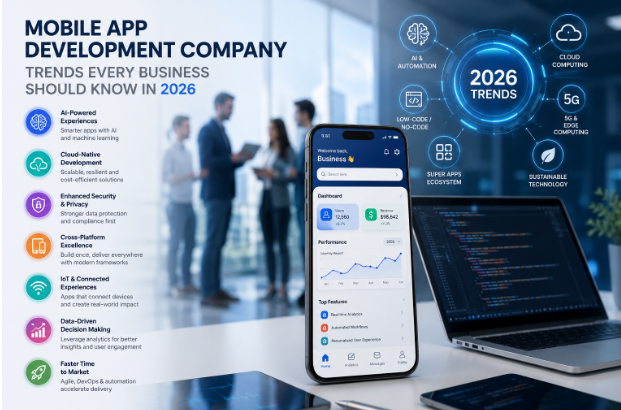
Zara had been running a mid-sized retail chain in the UAE for eight years before she went looking for help building her first mobile app. She expected the conversation with development teams to be about features. What she found instead was that every credible team she spoke to wanted to talk about the platform’s architecture first, the AI integration strategy second, and features third. The conversation she’d expected to have, how many screens, which color scheme, whether to do iOS or Android first, kept getting displaced by questions she hadn’t prepared for: what data does the business currently collect and what decisions does it need to make, what’s the retention problem the app is supposed to solve, how does the app connect to the inventory and CRM systems the business already runs on.
She was initially frustrated by this. Two months into working with the mobile app development company she ultimately chose, she understood why those questions came first. Here’s what the development landscape looks like in 2026, the trends shaping what good development looks like, and why some of those trends matter to business owners who don’t think of themselves as technology people.
AI Is Now a Foundation Layer, Not an Add-On Feature
Three years ago, AI features in a mobile app meant a chatbot that answered FAQ questions or a recommendation engine that suggested products based on browsing history. Both were real but limited applications. What’s changed is that AI has moved from being a feature that gets added to an app into being part of how the app is architectured from the start.
On-device inference using Core ML on iOS and ML Kit on Android allows apps to run machine learning models directly on the user’s device, without sending data to a server. This matters for three reasons: it works offline, it’s faster than a server round-trip, and it preserves user privacy in ways that server-side processing doesn’t. A retail app that can recognize products through the camera and provide inventory information without an internet connection is a qualitatively different product from one that requires connectivity for every action.
Large language model integration through APIs from providers like OpenAI and Anthropic has made conversational interfaces genuinely useful rather than novelty features. A customer service interface that can actually understand a return policy question and give a specific, accurate answer is different from the keyword-matching chatbots of five years ago. For Zara’s retail app, this meant a product search interface that understood natural language queries, handling “something my daughter could wear to a beach wedding” as a search input rather than requiring a structured filter interaction.
The architectural implication is that AI capabilities need to be designed into the data layer and API structure from the start rather than retrofitted later, which is why experienced development teams ask about data strategy before feature lists.
Super Apps and Feature Consolidation
Users have reached a practical limit on how many apps they’re willing to install and maintain. The average smartphone user in 2026 actively uses fewer apps than in 2020, despite having more options available. This has created pressure across most app categories to either be genuinely excellent at a narrow function or to expand into the adjacent needs that bring users back repeatedly.
The super app model, pioneered in Southeast Asia by WeChat and Grab and now spreading to other markets, consolidates multiple services into a single app with a common identity layer. A retail app that adds loyalty, customer service, product discovery, and community features becomes an app users return to for multiple purposes rather than just transactional moments. The strategic question for any business with an existing app is whether the product is genuinely excellent at its core function, and if so, which adjacent services belong within it.
For Zara, this meant designing the initial app with a data model that could eventually support a loyalty program and a community feature without architectural rework, even though those features weren’t in scope for version one.
Privacy-First Architecture as a Competitive Advantage
App tracking transparency on iOS, introduced in 2021, changed the economics of mobile advertising and forced a broader reckoning with how apps collect and use user data. In 2026, the downstream effects of that shift are fully visible: users who have lived through several years of privacy settings and permission requests have become meaningfully more suspicious of apps that ask for data they don’t obviously need.
The businesses that are building the most trusted consumer apps are treating privacy architecture as a product feature rather than a compliance requirement. Data minimization, collecting only what the app genuinely needs. On-device processing for sensitive data wherever possible. Transparent permission requests that explain why access is needed before asking for it. These choices produce better user experience and better trust metrics, not just better compliance posture.
App Store review has also tightened considerably on privacy-related requirements. Apps that can’t clearly justify their permission requests or that violate Apple’s data use policies face rejection or removal, and the review team’s interpretation of those policies has become stricter with each passing year.
The Voice and Conversational Interface Shift
Text input on mobile has always been a friction point relative to desktop, and voice interfaces have finally reached the quality threshold where they’re genuinely useful rather than reliably frustrating. This shift is changing interaction patterns across several app categories.
Healthcare apps where patients record symptoms verbally rather than typing structured inputs. Field service apps where technicians update job status by voice while their hands are occupied. E-commerce apps where search happens conversationally. These aren’t future possibilities; they’re shipping products in 2026, and the user experience advantage they create is significant in the specific contexts where voice input fits the use case.
iOS’s Speech framework and Android’s SpeechRecognizer API provide the platform-level infrastructure. What varies between implementations is how well the app handles the messiness of real speech: ambient noise, accents, incomplete sentences, corrections. The apps that handle these cases well are the ones whose voice features get used; the ones that don’t handle them well train users to avoid the feature after one or two failed attempts.
The Payment and Commerce Infrastructure Maturation
Mobile commerce has reached a level of infrastructure maturity that fundamentally changes what a retail or commerce app can do. Apple Pay, Google Pay, and regional alternatives like Mada in Saudi Arabia and PayNow in Singapore have made in-app payments fast enough that payment friction no longer meaningfully suppresses conversion. Buy-now-pay-later integration through providers like Tabby and Tamara (dominant in the UAE and broader Middle East) has become expected in retail app checkout flows in that market.
The architecture for commerce in 2026 assumes instant payment, flexible payment options, and frictionless checkout as baseline requirements rather than differentiating features. Apps that don’t meet this baseline lose the purchase at the moment of intent, which is the worst place to lose it.
For Zara’s app, this meant integrating Tabby for BNPL alongside standard payment methods from the start, since her customer research showed that a significant portion of her target demographic was already using Tabby for in-store purchases and expected it to be available in any digital channel.
What the Best New App Ideas Have in Common
Top mobile app ideas getting serious development investment in 2026 share characteristics that reflect the broader trends above. They use on-device AI to deliver experiences that require connectivity and a server round-trip to replicate. They solve problems specific to a defined audience rather than trying to serve everyone. They’re built around a data model that supports personalization over time rather than delivering the same experience to every user regardless of history.
In the vertical software space, apps built for specific professional contexts, construction site management, clinical documentation, field service coordination, are attracting investment because the generic horizontal tools have failed to serve those contexts well, and the users in those contexts have enough switching pain from their current inadequate tools that a well-built vertical solution retains them effectively.
For consumer apps, the ideas getting traction are the ones built around authentic community rather than network effects alone. A fitness app where the community is the product, not just a feature. A learning platform where peer cohorts drive accountability rather than individual progress tracking. An e-commerce experience where curation and community overlap with commerce in a way that big platforms can’t replicate.
What Zara’s App Looks Like Now
She launched fourteen months after starting the development conversation. The app handles product discovery through natural language search, integrates her loyalty program, offers Tabby at checkout, and has an order tracking experience that her customer service team says has materially reduced inbound inquiries about order status.
The questions the development team asked at the start of the process, about data, retention, and system integration, shaped every one of those outcomes. The features she’d initially wanted to talk about all made it into the app. They just made it in better form because the architecture that supported them had been thought through first.
The businesses that will build the most successful apps in the next two years are the ones that approach the development conversation the same way: strategy and architecture first, features second, color schemes whenever that conversation finally comes up.




Most Commented Posts