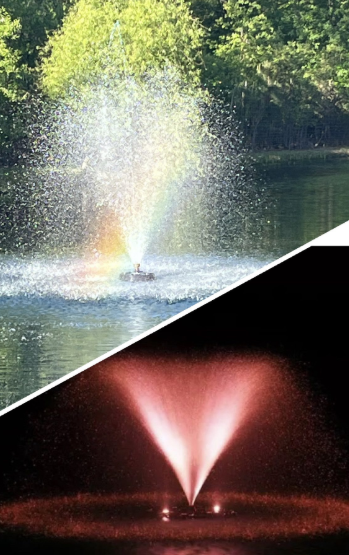
A pond fountain can be attractive during the day, but the visual impact often fades once natural light disappears. Adding pond fountain lights can extend the appeal of the water feature into the evening by highlighting spray patterns, movement, reflections, and the surrounding landscape. The best results come from more than simply placing bright fixtures near the water. Beam direction, fixture positioning, brightness, color, electrical safety, water clarity, and the shape of the fountain all influence how the final display looks. A carefully planned lighting setup can create a stronger focal point while avoiding harsh glare or unnecessary energy use.
Why Add Lights to a Pond Fountain?
Lighting allows a fountain to remain visible after sunset and can dramatically change the way moving water appears.
When light passes through spray and droplets, it creates reflections and highlights that cannot be seen as clearly during daylight hours. This can give a pond greater visual depth and make the fountain feel like an intentional part of the landscape rather than simply a daytime feature.
Pond fountain lights can be useful in settings such as:
- Residential properties
- Hotels and resorts
- Golf courses
- Community ponds
- Commercial landscapes
- Parks
- Event venues
They may also improve general visibility around the water feature, although decorative lighting should not be treated as a replacement for dedicated safety lighting around paths or walkways.
How Should Fountain Lights Be Positioned?
Fixture placement is one of the most important parts of fountain lighting.
Lights should generally be aimed toward the moving water rather than directly toward people viewing the pond. Poor positioning can create glare that makes the fountain less comfortable to look at.
For many installations, pond fountain lights are positioned close to the fountain so their beams follow the spray upward.
The number of fixtures depends on the fountain size and shape. A narrow vertical spray may need fewer lights than a wide multi-pattern fountain.
If the fountain can be viewed from several sides, lighting should also be distributed so one angle does not appear bright while another remains dark.
Match the Light to the Spray Pattern
Different fountain patterns create different lighting requirements.
Tall vertical jets often look best with focused beams that illuminate the full height of the water. Broad fan-shaped sprays may benefit from wider beams or several fixtures positioned around the fountain.
When choosing pond fountain lights, consider:
- Spray height
- Spray width
- Number of nozzles
- Water movement
- Fountain diameter
- Viewing distance
The lighting pattern should complement the shape of the water rather than competing with it.
Testing fixture angles after installation can help fine-tune the effect.
Are LED Fountain Lights a Good Choice?
LED lighting is widely used in outdoor water features because of its energy efficiency and long operating life.
Compared with older halogen or incandescent lighting, LED fixtures generally use less electricity for a comparable amount of light. This can be particularly useful when fountains operate for several hours every evening.
Modern pond fountain lights may offer white illumination or programmable color-changing systems.
LED systems may also generate less heat and offer greater control over brightness and color.
However, buyers should still compare waterproof ratings, electrical requirements, fixture quality, and compatibility with the fountain rather than choosing based only on LED technology.
White Light or Color-Changing Light?
Both can work well depending on the setting.
White light creates a classic, understated appearance and may be especially appropriate for formal landscapes, residential ponds, or properties with warm architectural lighting.
Color-changing pond fountain lights can create a more dramatic display and may be useful for:
- Holidays
- Special events
- Hotels
- Community spaces
- Commercial properties
The key is moderation.
Rapidly changing colors can appear distracting in a calm landscape, while slow transitions or a single selected color may create a more polished effect.
Homeowners should think about how the fountain lighting relates to other exterior lighting on the property.
How Bright Should Pond Fountain Lights Be?
Brightness should be matched to the size of the fountain and viewing distance.
A very bright fixture may overpower a small pond, while weak lights may fail to illuminate a large spray pattern.
More brightness is not always better. Excessive illumination can create glare and make surrounding areas appear unusually dark by comparison.
Well-designed pond fountain lights focus light where it is needed and minimize unnecessary spill.
Dimming controls can be useful because they allow brightness to be adjusted after installation according to season, ambient lighting, or personal preference.
Why Is Water Clarity Important?
Water condition can affect how light behaves.
Clearer water often allows illumination to appear sharper and more defined. Algae, sediment, or suspended particles can scatter light and make the fountain look cloudy or dull.
The lenses of pond fountain lights can also accumulate algae, mineral deposits, or debris.
Routine cleaning helps preserve brightness and prevents the fixtures from appearing weaker than they actually are.
Maintaining the pond itself can therefore improve both daytime appearance and nighttime lighting performance.
What Electrical Safety Features Matter?
Any electrical equipment used near water should be designed specifically for wet environments.
Lighting fixtures should have appropriate waterproof ratings, while cables, connectors, transformers, and power supplies should meet the manufacturer’s installation requirements.
When installing pond fountain lights, important considerations may include:
- Ground-fault protection
- Weather-resistant connections
- Proper cable routing
- Approved underwater fixtures
- Correct voltage
- Safe transformer placement
Local electrical codes should also be followed.
For permanent installations, particularly around large ponds or commercial sites, a qualified electrician may be the safest option.
How Can Timers Improve Fountain Lighting?
Timers can make operation easier and reduce unnecessary energy use.
Instead of switching lights on and off manually, the system can be programmed to operate only during evening hours.
Photocells are another option. These sensors can activate lighting automatically when ambient light falls below a certain level.
Combining timers with pond fountain lights can ensure the display operates when it is most visible without remaining on throughout the night.
Separate controls for the fountain pump and lighting may also provide greater flexibility.
How Do Fountain Lights Affect Landscape Design?
A fountain should ideally connect visually with the rest of the property.
If surrounding pathways, trees, or architectural features use warm-white lighting, using extremely cool or saturated fountain lighting may make the pond look disconnected from the overall design.
Pond fountain lights can instead be used to create a visual hierarchy.
The fountain may be the primary focal point, while nearby landscaping receives softer illumination.
This layered approach can create depth and make the entire outdoor area feel more intentional.
What Maintenance Do Pond Lights Need?
Even outdoor-rated lighting requires occasional maintenance.
Fixtures should be checked for:
- Algae buildup
- Mineral deposits
- Damaged cables
- Loose mounting hardware
- Water intrusion
- Flickering LEDs
- Corroded connections
Cleaning frequency depends on water quality and local environmental conditions.
Leaves, sediment, and aquatic growth may accumulate more quickly in some ponds than others.
Regular inspection of pond fountain lights can help identify small issues before they lead to complete fixture failure.
What Should You Consider Before Installation?
A lighting plan should begin with the fountain itself.
Ask:
- How high is the spray?
- How wide is the pattern?
- From where will people view it?
- Is the fountain fixed or floating?
- How deep is the pond?
- Where is electrical power available?
- Will color-changing lighting be useful?
- How easy will the fixtures be to maintain?
Answering these questions can help determine the number, position, and type of fixtures needed.
It can also reduce unnecessary spending on lights that are too powerful or poorly suited to the fountain.
Conclusion
Fountain lighting can extend the visual appeal of a pond well beyond daylight hours, but successful results depend on careful planning. Fixture placement, brightness, beam angle, color, electrical safety, water quality, and maintenance should all be considered together. When illuminating a floating fountain for pond, the lighting system should be designed around the fountain’s movement, spray width, viewing angles, and access for future maintenance so the display remains balanced and practical. Properly planned pond fountain lights can create a striking nighttime focal point without overwhelming the surrounding landscape. By matching the lighting system to the fountain design and maintaining both the fixtures and water quality, property owners can achieve a cleaner, more dramatic, and more reliable evening display.






Most Commented Posts