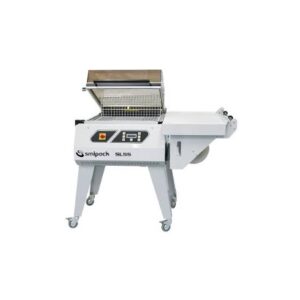
The Smipack SL55 is a compact, reliable shrink wrapping system used across retail, food processing, and light industrial packaging operations where consistent film wrapping quality and efficient throughput are production priorities. Sourcing the right Smipack SL55 parts when components wear, degrade, or fail is critical to maintaining the machine’s performance — and knowing which components require regular attention, where to source them reliably, and how to manage an effective preventive maintenance programme makes the difference between a machine that runs productively for years and one that accumulates avoidable downtime.
Key Components and Wear Patterns
Understanding the wear patterns of critical Smipack SL55 parts allows maintenance teams to plan proactively rather than responding reactively when a component fails mid-production. The sealing system components — seal bars, wires, and PTFE tapes — experience thermal cycling stress with every cycle and are among the highest-frequency replacement items in any shrink wrapping operation.
- Main seal bar assembly: The primary sealing element experiences direct thermal and mechanical stress in every cycle — inspect regularly for alignment and surface condition
- Cross seal bar: Handles transverse sealing and is subject to similar thermal cycling stress — condition directly affects seal quality and film waste
- PTFE coated tape: The non-stick coating on seal bars degrades with use — replacement at regular intervals prevents film adhesion issues
- Sealing wire: Nichrome wire heats to sealing temperature with each cycle — breaks typically occur at connection points after extended use
- Film transport rollers: Drive and guide rollers accumulate contamination and wear over time — cleaning and periodic replacement maintains film tracking accuracy
Preventive Maintenance Schedule
A structured preventive maintenance approach for Smipack SL55 parts significantly extends the machine’s operating life and reduces the frequency of unplanned production stoppages. Daily cleaning of the sealing area, weekly inspection of PTFE tape condition and seal bar alignment, and monthly checks of roller surfaces, drive belt tension, and electrical connection integrity are the minimum maintenance activities that experienced operators establish as standard procedure.
Logging all maintenance activities and replacement events creates a parts usage history that allows facilities to predict replacement intervals with increasing accuracy over time. This data-driven approach to parts management reduces emergency procurement events, supports budget planning, and provides the maintenance history documentation that service technicians require when diagnosing faults. Even a simple spreadsheet log maintained consistently over twelve months delivers actionable predictive data that ad hoc maintenance approaches cannot produce.
Sourcing Genuine Replacement Parts
The quality of Smipack SL55 parts sourced for replacement directly affects the machine’s sealing performance and the interval before the next replacement is needed. Genuine OEM or verified-equivalent components manufactured to the original dimensional and material specifications consistently outperform off-specification alternatives — particularly for sealing wires, PTFE tapes, and seal bar assemblies where dimensional accuracy and thermal properties are critical to consistent seal quality.
Working with a specialist packaging machinery parts distributor who maintains a dedicated Smipack parts inventory provides faster fulfilment, more accurate part identification, and better availability than general industrial supply channels. A specialist distributor with experience across the Smipack product range can also advise on correct replacement intervals and identify compatible upgraded components where improvements to original specifications are available.
Troubleshooting Common Issues
Most common faults on the SL55 trace back to worn or degraded Smipack SL55 parts rather than fundamental machine failures. Poor seal quality typically indicates worn PTFE tape, misaligned seal bars, or degraded sealing wire. Film tracking problems generally point to roller contamination, worn drive belts, or mis-adjusted film path guides. Identifying the root component cause before ordering replacement parts avoids the cost of replacing items that are not actually responsible for the fault.
Final Words
A well-maintained SL55 is a productive and reliable packaging asset. Facilities managing this and other shrink wrapping equipment will find that a specialist supplier offering a comprehensive range of parts for machines across major packaging equipment brands delivers faster identification, better stock availability, and more dependable fulfilment than generalist procurement channels.






Most Commented Posts