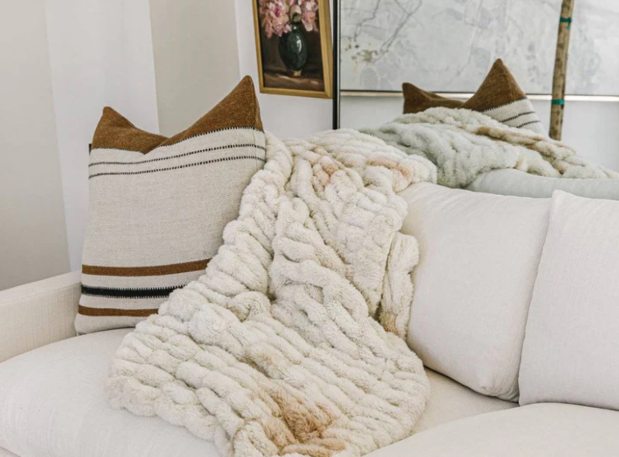
Creating a comfortable home involves choosing furnishings that balance practical use with visual appeal. Soft accessories can make everyday spaces feel more inviting without requiring major changes to furniture or decoration.
Neutral colors have an important place in interior design because they work with a wide range of decorative styles. Shades such as beige, cream, taupe, ivory, and soft gray can complement different furniture finishes and wall colors.
A neutral throw blanket offers a simple way to introduce softness and texture while maintaining a coordinated appearance. Unlike highly contrasting patterns or seasonal colors, neutral shades can remain relevant even when other decorative elements change.
Their flexibility makes them suitable for living rooms, bedrooms, reading corners, and other frequently used areas. They can also help connect different colors within a room without becoming the main decorative feature.
Understanding Different Neutral Shades
1. Beige and Sand
Beige and sand tones introduce warmth into a room. They work particularly well with wooden furniture, cream upholstery, natural flooring, and earthy decorative accents.
These shades can help create a relaxed appearance without relying on bright colors.
2. Cream and Ivory
Cream and ivory offer a lighter alternative to traditional beige. They can complement white walls and soft-colored furniture while creating subtle differences in tone.
These shades are particularly useful in interiors where a bright and understated appearance is preferred.
3. Gray and Greige
Gray can support modern and minimalist interiors. Greige, which combines gray and beige characteristics, offers a middle ground between cool and warm color schemes.
Both options can coordinate with black, white, wood, and muted decorative colors.
4. Taupe and Earthy Neutrals
Taupe and similar earthy shades introduce depth without creating a strong contrast. They can complement natural materials, darker furniture, and warm interior palettes.
Selecting the Right Fabric and Texture
Plush materials: These generally feature a soft, raised surface that creates a fuller appearance. They may be suitable for seating areas where tactile comfort is important.
Fleece: Fleece is commonly used for household coverings because of its soft feel and insulating characteristics. Its specific properties depend on the fiber composition and construction.
Cotton: Cotton textiles are available in different weaves and thicknesses. Their texture and overall weight vary according to how they are manufactured.
Woven fabrics: Woven coverings can introduce visible structure and a more defined appearance, making them suitable for interiors that combine different textile textures.
When comparing materials, examine the product description and care instructions rather than assuming that all soft coverings have identical properties.
How to Style Neutral Throws in Different Rooms
Living Room Arrangements
A folded blanket placed over a sofa arm can create a neat and accessible arrangement. Alternatively, draping it loosely across one side of the sofa introduces a relaxed appearance.
For a coordinated result, consider the upholstery, cushions, rugs, and surrounding furniture before selecting a shade.
Bedroom Layering
A covering positioned across the foot of a bed can introduce another layer of texture. Combining different neutral shades can create visual depth without introducing complicated patterns.
For example, cream bedding can be paired with a taupe or beige covering to create subtle contrast.
Reading and Relaxation Corners
A chair, small side table, and soft covering can help establish a dedicated relaxation area. Keep the surrounding accessories simple so the space remains comfortable and uncluttered.
Matching Neutral Textiles With Different Interior Styles
Neutral coverings are adaptable, but their presentation should suit the room’s overall design.
- Minimalist interiors: Choose simple textures and limited color combinations.
- Modern interiors: Combine gray or greige with clean furniture lines.
- Traditional interiors: Consider cream, beige, and warm earthy tones.
- Scandinavian-inspired interiors: Use lighter shades alongside wood and natural textures.
- Rustic interiors: Combine taupe and sand tones with textured surfaces.
The objective is to create a consistent appearance rather than make every furnishing identical.
Conclusion
Choosing a neutral covering involves balancing color, texture, size, and everyday practicality. When comparing minky blankets for sale, examine their material descriptions, dimensions, construction, and maintenance requirements rather than relying only on photographs or color preferences. The right combination can complement existing furnishings while introducing an additional layer of comfort.






Most Commented Posts