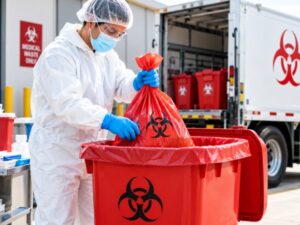
Healthcare facilities, laboratories, medical practices, dental offices, and other clinical environments regularly generate materials that may pose biological or physical hazards. Blood-contaminated materials, cultures, certain laboratory waste, and contaminated protective equipment require careful handling to protect workers and the public. Unlike ordinary municipal waste, these materials may need specialized containment, transportation, treatment, and disposal.
A well-organized biohazard waste pickup process helps facilities manage these materials from the point of generation through their final treatment or disposal. Safe handling depends on correctly identifying waste, separating different waste streams, using appropriate containers, maintaining secure storage areas, and following applicable federal, state, and local requirements.
What Is Biohazard Waste?
Biohazard waste generally refers to waste that may contain infectious agents or materials capable of transmitting disease. Examples can include blood-contaminated materials, certain laboratory cultures, contaminated personal protective equipment, and other materials requiring regulated handling.
The Centers for Disease Control and Prevention identifies several categories of regulated medical waste that require special handling precautions, including microbiology laboratory waste, bulk blood and bloody body-fluid specimens, pathology and anatomical waste, and sharps.
Not every item generated in a healthcare environment is automatically considered biohazardous. Classification depends on the characteristics of the material and the regulations applicable to the facility’s location.
Why Is Proper Segregation Important?
Waste segregation should begin where materials are generated. Separating waste streams prevents incompatible materials from being mixed and helps ensure that each category receives an appropriate treatment or disposal method.
For example, ordinary uncontaminated waste should generally remain separate from regulated medical waste. Sharps also require dedicated puncture-resistant containers rather than ordinary waste bags.
The CDC recommends placing disposable syringes with needles, scalpel blades, and other sharp items into puncture-resistant containers located as close as practical to the point of use.
Clear labeling and conveniently positioned containers can make correct segregation easier for employees.
What Containers Are Used for Biohazardous Waste?
Container selection depends on the type and physical characteristics of the waste.
Regulated medical waste may require sturdy, leak-resistant bags or containers. Sharps require containers that are specifically designed to resist punctures and leaks. OSHA requires containers for contaminated sharps to be closable, puncture-resistant, leak-proof on the sides and bottom, and appropriately labeled or color-coded.
Containers should also remain in suitable condition throughout use. Damaged, leaking, or improperly sealed containers should be addressed according to the facility’s waste management procedures.
How Should Sharps Be Handled?
Sharps create a particular occupational risk because needles, scalpels, broken glass, and similar objects can penetrate the skin and potentially expose workers to blood or other infectious materials.
OSHA requires contaminated sharps to be discarded immediately or as soon as feasible into appropriate containers. These containers should be easily accessible and located close to the areas where sharps are used.
Used needles should not be bent, broken, or routinely recapped before disposal. The CDC recommends placing them directly into an appropriate sharps container after use.
This approach reduces unnecessary handling and helps minimize the possibility of needlestick injuries.
When Should Sharps Containers Be Replaced?
Sharps containers should not be allowed to become overfilled. Overfilling can increase the possibility of protruding needles and other sharp objects causing injury.
OSHA recommends keeping sharps containers upright, replacing them routinely, and closing them immediately before removal or replacement to prevent spillage or protrusion of contents.
Facilities should establish clear procedures for monitoring fill levels so that containers can be replaced before they reach an unsafe condition.
How Should Biohazard Waste Be Stored?
Waste awaiting collection or treatment should be stored in a controlled area that limits unauthorized access and reduces the potential for exposure.
The CDC recommends storing regulated medical waste in labeled, leak-proof, and puncture-resistant containers when appropriate. Storage areas should be well ventilated and inaccessible to pests.
Storage procedures may also need to address temperature, duration, container integrity, odor control, and access restrictions depending on the type of waste and applicable jurisdictional requirements.
Facilities should regularly inspect storage areas for leaks, damaged containers, improper labeling, or other issues.
What Happens During Biohazard Waste Pickup?
A biohazard waste pickup generally involves the collection of properly contained waste from a designated storage location and its transportation for appropriate treatment or disposal.
Before collection, facility personnel should ensure that waste is correctly segregated, containers are properly closed, and required labels or documentation are in place.
The CDC recommends that facilities develop a plan covering collection, handling, pretreatment, and final disposal of regulated medical waste.
If treatment is not available where the waste is generated, the CDC recommends transporting regulated medical waste in closed, impervious containers to an appropriate treatment location.
The precise transportation and documentation requirements depend on the waste category and applicable federal, state, and local regulations.
Why Is Employee Training Important?
Even properly designed waste systems can be ineffective if employees do not know how to use them. Workers responsible for handling potentially infectious waste should understand the hazards associated with different materials and the procedures for containment and disposal.
Training should cover waste segregation, container selection, sharps handling, personal protective equipment, spill response, storage procedures, and reporting requirements.
The CDC specifically recommends training personnel involved in handling and disposal of potentially infectious waste on the appropriate handling and disposal methods.
Refresher training can also help reinforce correct practices and address procedural changes.
How Is Biohazard Waste Treated?
Treatment methods depend on the type of waste and the requirements established by the relevant authority. Potential methods include steam sterilization, incineration, and other approved treatment technologies.
The CDC recommends treating regulated medical waste using a method approved by the appropriate authority having jurisdiction before disposal in a sanitary landfill when applicable.
Treatment is intended to reduce the hazards associated with the waste before its final disposal. The appropriate method depends on the material’s characteristics and applicable regulations.
What Role Does Documentation Play?
Documentation provides an important record of how waste is handled throughout its disposal process. Depending on the waste stream and jurisdiction, records may include information about quantities, collection dates, transportation, treatment, and final disposal.
A documented waste management plan can also clarify employee responsibilities and establish procedures for routine collection and unexpected situations such as spills or damaged containers.
The CDC recommends that facilities designate responsible personnel to establish, monitor, review, and administer regulated medical waste management plans.
How Can Facilities Improve Waste Handling?
Facilities can strengthen their waste programs by reviewing how waste is generated and handled at each stage. Practical measures include:
- Placing appropriate containers close to points of use
- Separating regulated and non-regulated waste
- Monitoring sharps containers before they become overfilled
- Training employees regularly
- Keeping storage areas secure and clean
- Inspecting containers for leaks or damage
- Maintaining accurate disposal records
- Reviewing applicable regulatory requirements
A facility should also periodically evaluate whether its current procedures continue to match the types and quantities of waste being generated.
Conclusion
Safe biohazard waste pickup depends on more than removing waste from a healthcare facility. Proper segregation, appropriate containers, secure storage, employee training, documentation, transportation, and approved treatment methods all contribute to a safer disposal process. Facilities should give particular attention to sharps waste disposal, since needles and other contaminated sharp objects can cause injuries when they are improperly handled, stored, or discarded. Using accessible puncture-resistant containers and replacing them before they become overfilled can reduce preventable risks.







Most Commented Posts