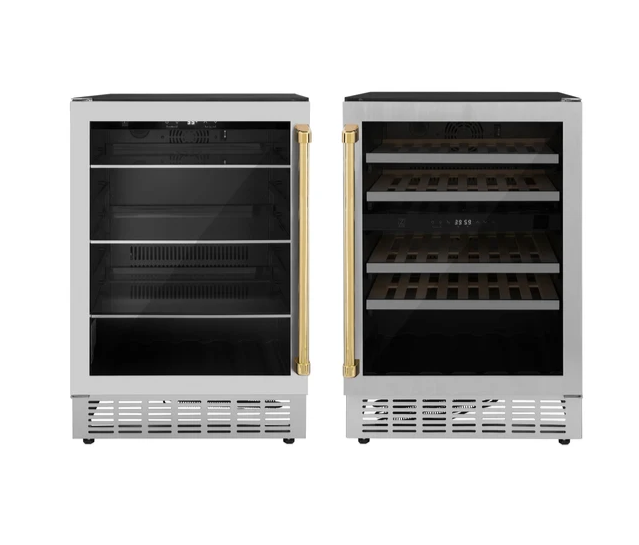
Wine storage can become challenging when kitchen space is limited. Bottles need a stable environment, while homeowners often want their storage solution to integrate neatly with cabinetry, bars, or entertainment areas. An under counter wine cooler can address both requirements by providing dedicated wine storage without taking up valuable floor space.
Unlike a standard refrigerator, a wine cooler is designed around the temperature and storage needs of wine. Current buying guidance generally recommends focusing on temperature stability, capacity, installation requirements, shelving, noise, and bottle accessibility when comparing wine-storage appliances.
What Is an Under Counter Wine Cooler?
An under counter wine cooler is a wine-storage appliance designed to fit beneath a countertop. These units are commonly used in kitchens, home bars, dining areas, entertainment spaces, and other locations where a built-in appearance is preferred.
The main advantage is efficient use of space. Instead of requiring a separate freestanding appliance, an under-counter model can occupy a cabinet-sized area while keeping wine conveniently accessible.
However, not every wine refrigerator is suitable for built-in installation. Buyers should check the manufacturer’s installation specifications before placing an appliance inside cabinetry.
Why Is Built-In Ventilation Important?
Ventilation is one of the most important considerations when installing a wine cooler beneath a counter.
Cooling systems produce heat that needs to be released. A model designed for built-in installation generally incorporates ventilation suitable for enclosed cabinetry. A freestanding appliance may require clearance around its sides or rear and should not automatically be enclosed within a cabinet.
Dedicated built-in wine coolers are specifically designed to work within this type of installation environment. Manufacturer guidance commonly distinguishes between built-in models, which require appropriate ventilation planning, and fully integrated designs with internal ventilation arrangements.
Before installation, check the required cabinet opening, clearance, ventilation location, and electrical connection.
What Temperature Should a Wine Cooler Maintain?
Temperature stability is more important than simply selecting the coldest available setting.
Wine is generally stored at warmer temperatures than food in a conventional refrigerator. Different wines may also have different serving-temperature preferences.
A dedicated wine cooler allows users to maintain a controlled environment appropriate for wine rather than using the much colder conditions of a standard food refrigerator. Wine-storage guidance commonly places many wines within approximately 10–14°C for storage, while serving temperatures can vary by wine type.
A model with adjustable temperature control gives homeowners greater flexibility. Dual-zone models can be especially useful for households that regularly store different types of wine.
Single-Zone or Dual-Zone?
The choice between single-zone and dual-zone cooling depends on the type and variety of wine being stored.
Single-Zone Cooling
A single-zone wine cooler maintains one temperature throughout its interior. This arrangement is straightforward and can work well when most of the collection is stored under similar conditions.
It can also provide more consistent space throughout the cabinet because there is no division between temperature zones.
Dual-Zone Cooling
A dual-zone model provides two independently controlled areas. This can be useful when homeowners want different sections for wines with different serving requirements.
Dual-zone wine refrigerators are commonly recommended for collections containing both red and white wines because they allow separate temperature settings.
The extra flexibility can be valuable, although it may reduce the amount of usable space available in each zone.
How Much Bottle Capacity Do You Need?
Bottle capacity should be based on both your current collection and expected future needs.
Manufacturers often state capacity using standard wine bottles, but actual usable capacity can vary because bottle shapes and sizes are not uniform. Champagne bottles, Burgundy-style bottles, and larger formats may require more shelf space than standard bottles.
For this reason, a cooler advertised for a certain number of bottles may hold fewer bottles when the collection contains a mixture of shapes and sizes.
It is often sensible to choose slightly more capacity than your current collection requires. Wine collections can grow over time, and a completely full appliance can make individual bottles harder to access.
What Type of Shelving Is Best?
Shelving has a major impact on the practicality of a wine cooler.
Useful shelving features can include:
- Sliding shelves
- Adjustable racks
- Removable shelves
- Bottle supports
- Secure shelf stops
- Shelves designed for larger bottles
Sliding shelves can make it easier to inspect labels and reach bottles toward the back. Adjustable shelves provide additional flexibility when storing bottles with different dimensions.
The advertised bottle capacity should therefore be considered alongside the actual shelf configuration.
Does Door Design Matter?
Glass doors are common on wine coolers because they allow users to see the collection without opening the appliance.
This can be particularly convenient in kitchens and home bars where homeowners want to identify a bottle quickly. However, buyers should consider the door’s insulation, glass construction, UV protection, and seal quality rather than treating appearance as the primary consideration.
Light exposure is one of the environmental factors that can affect wine over time. Wine-storage guidance recommends protecting bottles from excessive heat, light, and vibration, particularly when bottles are being stored for extended periods.
Can You Store Other Drinks in a Wine Cooler?
A wine cooler is primarily designed around wine storage, so it is not necessarily the best choice for households that mainly need cold cans and bottled beverages.
A beverage refrigerator generally has an interior configuration and temperature range intended for a wider variety of drinks. Beverage appliances can accommodate cans, water bottles, soft drinks, and other containers more conveniently than wine-specific racks.
If a household regularly stores both wine and other beverages, it is worth comparing a dedicated wine cooler with a mixed-use beverage appliance.
What About a Wine and Beer Fridge?
A wine and beer fridge sounds like a convenient all-purpose solution, but buyers should examine the temperature range and interior design carefully.
Beer is commonly served considerably colder than many wines, while wine storage generally prioritizes stable temperatures and bottle organization. A single-temperature appliance may therefore involve compromises when it is expected to handle both categories.
For households that regularly entertain, a dual-zone or appropriately configured beverage appliance may provide greater flexibility.
The key is to determine whether wine preservation or general beverage chilling is the primary purpose of the appliance.
How Does a Beverage Cooler Fridge Differ?
A beverage cooler fridge is generally designed for mixed drinks rather than exclusively for wine. Its shelving may be optimized for cans, bottles, and other beverage containers, making it useful for entertainment areas and home bars.
Wine coolers, by comparison, commonly use horizontal bottle racks and temperature ranges intended for wine. Current industry guidance emphasizes that wine refrigerators and beverage refrigerators serve different storage purposes, even though they can look similar externally.
Choosing between them should therefore begin with the types of drinks that will be stored most frequently.
What About Noise?
Noise is worth considering when the cooler will be installed in an open kitchen, dining room, bedroom-adjacent area, or entertainment space.
Compressors and fans can produce audible cycling sounds, even in compact appliances. A lower published decibel rating can be preferable when the appliance will operate close to living spaces.
The surrounding cabinet structure can also influence how sound is perceived. Checking the manufacturer’s noise specifications and installation instructions can help set realistic expectations.
What Should You Check Before Installation?
Before purchasing, measure the intended opening carefully.
Check:
- Cabinet width
- Cabinet height
- Cabinet depth
- Door clearance
- Hinge position
- Ventilation requirements
- Electrical outlet location
- Floor level
- Surrounding cabinet clearance
- Required installation depth
Also confirm whether the appliance is specifically approved for built-in use.
This step is particularly important because a wine cooler that physically fits an opening may still be unsuitable if its ventilation system requires additional clearance.
Is an Under Counter Wine Cooler Worth It?
For homeowners who want dedicated wine storage without sacrificing floor space, an under counter wine cooler can be a practical solution. Its built-in format makes it particularly suitable for kitchens, bars, dining areas, and entertainment spaces.
The right model depends on bottle capacity, temperature requirements, zone configuration, shelving, ventilation, noise, and available installation space. A dedicated wine appliance can also provide a more appropriate environment for wine than a conventional refrigerator.
Conclusion
An under counter wine cooler can combine efficient use of kitchen space with dedicated wine storage, making it useful for homeowners who want their collection close at hand without installing a large freestanding appliance. Temperature stability, bottle capacity, shelving, ventilation, door construction, noise, and installation requirements should all be considered before choosing a model. For households that also store soft drinks, water, beer, or other beverages, a beverage refrigerator may provide greater versatility than a wine-specific appliance. Those seeking a wine and beer fridge should compare temperature ranges carefully, while a beverage cooler fridge may be more appropriate when mixed-drink storage is the primary requirement. The best choice ultimately depends on what you plan to store, how much space is available, and whether the appliance will be used primarily for wine preservation or general beverage cooling.






Most Commented Posts