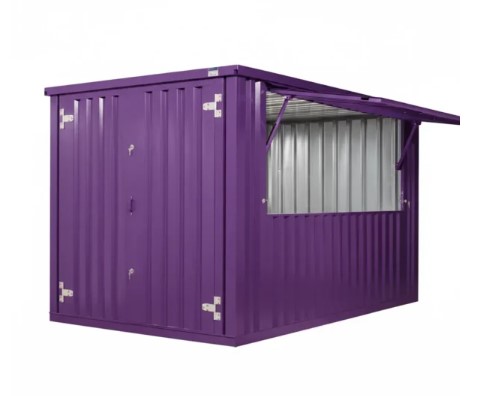
A compact structure can provide useful additional space without requiring the footprint of a full-size building. A 10-foot kiosk unit can be considered for applications where limited floor area needs to accommodate storage, retail activity, customer service, equipment, or another defined purpose. The usefulness of a compact unit depends on its interior layout, access points, electrical requirements, ventilation, insulation, and intended use. In Albuquerque, climate conditions and local development requirements can also influence how a structure should be installed and operated. Understanding these considerations before placement can help property owners determine whether a compact kiosk format is appropriate for their needs.
What Is a 10-Foot Kiosk Unit?
A kiosk is generally a compact, purpose-specific structure designed to provide a contained area for a particular activity. Depending on its construction and configuration, it can function as a small commercial space, service point, information station, or storage-related structure.
The phrase 10-foot kiosk unit describes the unit’s nominal length, but length alone does not establish its usable capacity. Width, ceiling height, door placement, windows, wall thickness, and internal fixtures all affect the amount of functional space available.
For this reason, users should review the complete dimensional specifications rather than relying only on the advertised length.
What Can You Use a 10-Foot Kiosk For?
The appropriate application depends on the unit’s design and local regulations. Compact kiosk structures can potentially support uses such as:
- Small retail or sales points
- Ticketing or customer-service areas
- Information booths
- Equipment or supply storage
- Security or access-control stations
- Temporary or specialized workspace
A kiosk designed for people to occupy regularly will have different requirements from one intended primarily for storage. Electrical systems, heating and cooling, ventilation, lighting, accessibility, and fire-safety provisions may all become relevant when the space is occupied.
What Should Albuquerque Users Consider?
The City of Albuquerque’s Planning Department provides zoning and development resources that property owners can use to determine applicable requirements for a proposed use or structure. Requirements can vary depending on the property and proposed activity, so checking the applicable rules before installation is important. A 10-foot kiosk unit needs to be evaluated in relation to its intended site, not simply its physical dimensions. Albuquerque properties can have different zoning classifications, development standards, utility conditions, and permitting requirements.
Site conditions should also be considered. The unit may need an appropriate foundation or level surface, suitable drainage, utility connections, and adequate access for delivery and installation.
Does Climate Affect Kiosk Planning?
Yes. Albuquerque’s high-desert climate includes hot, sunny periods, relatively low humidity, and cooler conditions during other parts of the year. These conditions can affect the interior comfort and durability of a compact structure.
If people will occupy the kiosk, insulation, air conditioning, heating, ventilation, and appropriate weather sealing become more important. For storage applications, temperature-sensitive contents may require additional environmental controls.
The exterior material and roof design should also be appropriate for prolonged exposure to sun, precipitation, and temperature changes.
What Should You Check Before Installation?
Before installing a 10-foot kiosk unit, confirm its dimensions, intended use, foundation requirements, utility needs, access requirements, and applicable local regulations.
It is also useful to determine how the unit will be delivered to the property. Gates, driveways, overhead obstructions, landscaping, and neighboring structures can affect whether there is sufficient access for placement.
For commercial uses, additional considerations may include signage, customer access, parking, accessibility, fire safety, and business-specific permitting.
Conclusion
A compact structure can provide practical space when its design and intended use are carefully matched. A 10-foot kiosk unit may work for storage, customer service, retail, information, or other specialized purposes, but its suitability depends on more than its dimensions. For anyone considering a 10-foot kiosk unit in ABQ, evaluating the site, interior layout, utilities, climate, accessibility, and applicable Albuquerque requirements before installation can help avoid costly modifications and ensure the structure serves its intended purpose effectively.





Most Commented Posts