
Workplace injuries can happen in almost any occupation, from construction and manufacturing to offices, warehouses, healthcare facilities, and delivery work. Some injuries are minor and resolve with medical treatment, while others can result in significant medical expenses, time away from work, or long-term limitations. Understanding what to do after an accident is therefore important for protecting both health and legal rights.
In California, workers’ compensation generally provides medical treatment and disability benefits for qualifying work-related injuries and illnesses. However, the process can become complicated when an injury is disputed, benefits are delayed, or another party may be legally responsible. In these situations, understanding when to consult a workplace accident attorney can help an injured worker make informed decisions.
What Counts as a Workplace Accident?
A workplace accident is an unexpected event connected to employment that causes an injury or illness. Common examples include falls, machinery accidents, vehicle collisions, exposure to hazardous substances, repetitive-motion injuries, and injuries caused by unsafe working conditions.
Not every work-related condition results from one sudden event. California’s workers’ compensation system also covers certain illnesses and injuries that develop gradually when they are connected to employment. The California Division of Workers’ Compensation advises employees to report a gradually developing injury as soon as they learn or believe that it was caused by their job.
Employers also have workplace safety obligations. California employers must follow applicable safety requirements, maintain injury-prevention measures, and provide appropriate training and protections against recognized hazards.
What Should You Do Immediately After a Workplace Injury?
Taking appropriate steps soon after an accident can help create a clear record of what happened.
First, seek emergency medical attention if the injury requires immediate care. Otherwise, notify a supervisor or employer about the injury as soon as possible. California’s Division of Workers’ Compensation recommends prompt reporting because delays can create problems with obtaining benefits. If an injury is not reported within 30 days, an employee may lose the right to receive workers’ compensation benefits.
Employees should also complete the required workers’ compensation claim paperwork. California’s DWC states that an employer must provide a claim form within one working day after learning about a work-related injury or illness.
Keeping copies of medical records, accident reports, photographs where appropriate, correspondence, and other relevant documents can also help maintain an accurate record.
What Benefits Can Workers’ Compensation Provide?
Workers’ compensation is designed to provide benefits for qualifying work-related injuries and illnesses without requiring an injured employee to prove ordinary negligence by the employer.
Depending on the circumstances, benefits can include medical care, temporary disability payments, permanent disability benefits, and supplemental job displacement benefits. California’s DWC explains that workers’ compensation is intended to provide necessary medical treatment, partially replace lost wages during recovery, and help an injured worker return to employment.
Workers’ compensation generally does not provide damages for pain and suffering or punitive damages. That distinction is important when considering whether another legal claim may exist in addition to a workers’ compensation claim.
When Should You Contact a Workplace Accident Attorney?
Not every workplace injury requires legal representation. Some straightforward workers’ compensation claims may proceed without significant disputes. However, legal advice can become particularly useful when circumstances are more complicated.
An injured worker may consider consulting a workplace accident attorney when:
- The employer or claims administrator disputes whether the injury is work-related.
- Workers’ compensation benefits are denied or delayed.
- There is disagreement about medical treatment.
- The injury has resulted in significant or permanent impairment.
- The worker believes benefits are not being calculated correctly.
- Another person or company may have contributed to the accident.
- The worker is concerned about retaliation after reporting an injury or requesting benefits.
California’s DWC specifically notes that an attorney may be helpful when an employer or claims administrator is treating an injured worker unfairly, benefits are being withheld, or a permanent impairment exists.
What Happens If a Workers’ Compensation Claim Is Denied?
A denied claim does not necessarily mean the matter is over. California workers have the right to challenge a denial through the workers’ compensation system.
According to the DWC, an injured worker who receives a denial can contest the decision, although applicable filing deadlines should not be ignored. Disputes can ultimately be considered by a workers’ compensation administrative law judge.
The reasons for a denial can vary. A claims administrator may dispute whether an injury occurred during employment, whether the medical evidence supports the claim, or whether the condition is sufficiently connected to the job.
Because the facts and applicable deadlines differ from one case to another, professional legal guidance can be useful when a claim becomes contested.
Can You Sue Someone Other Than Your Employer?
Workers’ compensation generally operates as a separate system from ordinary personal-injury lawsuits. In some situations, however, an injured worker may have a potential claim against a third party who is not the employer.
For example, a worker injured in a motor vehicle collision while performing job duties may have circumstances involving another driver or vehicle owner. Construction workers may encounter accidents involving equipment supplied by another company. The legal options depend heavily on the facts and relationships between the parties.
California Courts recognize that employment-related matters can involve overlapping legal issues, including workplace safety cases, workers’ compensation matters, and other employment-related claims.
How Do Workplace Vehicle Accidents Differ?
Vehicle-related incidents can introduce additional considerations because responsibility may involve multiple parties. The circumstances may include an employee’s work duties, employer policies, another driver’s conduct, vehicle ownership, insurance coverage, and the location where the collision occurred.
Rideshare-related incidents can be especially fact-specific. Someone researching a Lyft accident attorney in Los Angeles may be dealing with a motor vehicle claim rather than a conventional workplace injury, and the applicable legal questions can differ depending on whether the injured person was a passenger, driver, pedestrian, cyclist, or another road user.
The key point is that a workplace accident involving a vehicle should not automatically be treated exactly like a conventional workplace injury. The facts surrounding employment, transportation, insurance, and third-party responsibility may all matter.
Can an Employer Retaliate After an Injury?
Workers should understand that reporting a workplace injury and requesting workers’ compensation benefits are protected activities. California states that employers may not punish or fire workers for exercising protected workplace rights.
California’s Workplace Know Your Rights Act, effective January 1, 2026, also requires employers to provide workers with annual information about several workplace rights, including workers’ compensation and protection from retaliation.
If an employee believes retaliation has occurred, the issue may involve more than the workers’ compensation claim itself. The appropriate legal or administrative process depends on the circumstances.
How Can an Attorney Help With a Workplace Injury Claim?
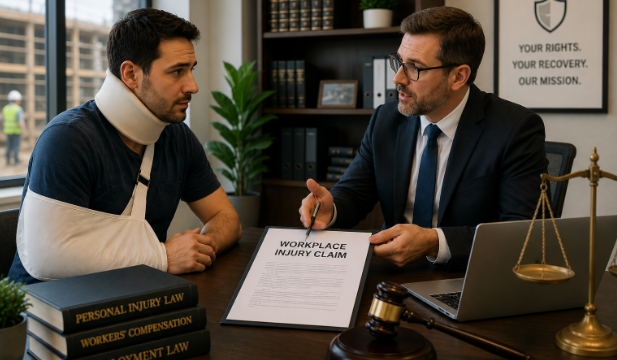
A workplace accident attorney can help an injured worker understand the workers’ compensation process, identify relevant evidence, communicate with insurers or other parties, and address disputes when they arise.
An attorney may also help determine whether a third-party claim could exist alongside workers’ compensation benefits. California’s injured-worker guidebook explains that attorneys representing injured workers can help protect rights, develop case strategies, gather supporting information, track deadlines, and represent workers in proceedings before a workers’ compensation judge.
Legal representation is not mandatory for every claim. The decision should depend on the complexity of the injury, the benefits involved, the presence of disputes, and the worker’s ability to navigate the process independently.
Conclusion
A workplace injury can create medical, financial, and employment-related challenges, making it important to understand the protections available under California law. Reporting an injury promptly, seeking appropriate medical care, completing the required claim paperwork, and keeping relevant records are practical steps that can help protect an injured worker’s position. When a claim is denied, benefits are delayed, permanent impairment is involved, or another party may be responsible, consulting a workplace accident attorney can provide clarity about available options. For people researching related vehicle-injury matters, a Lyft accident attorney in Los Angeles may address a different set of legal questions depending on the circumstances of the collision. Ultimately, each injury case should be evaluated according to its specific facts, applicable California law, and relevant deadlines.






Most Commented Posts