Every product that reaches a consumer has survived a journey through manufacturing, warehousing, distribution, and retail handling that tests its integrity at every stage. The packaging protecting that product during this journey determines whether it arrives in perfect condition or shows up damaged, contaminated, or visually compromised in ways that erode consumer trust and generate costly returns. Modern shrink wrap packaging has established itself as one of the most versatile, cost-effective, and visually appealing protection methods available to manufacturers and packagers across virtually every product category and industry vertical.
How shrink wrap packaging Works
The process is elegantly straightforward. A loose sleeve or sheet of thermoplastic film is placed around the product or group of products. The wrapped item then passes through a heat source, either a heat tunnel for automated lines or a handheld heat gun for manual operations, that causes the film to contract uniformly and conform tightly to the exact shape of the contents. The result is a clean, transparent, tamper-evident seal that:
- Protects against dust, moisture, dirt, and handling damage throughout the entire supply chain
- Provides full product visibility so consumers can see exactly what they are purchasing before opening
- Creates a professional, retail-ready presentation that enhances shelf appeal and brand perception
- Delivers tamper evidence that assures consumers the product has not been opened or interfered with since leaving the factory
- Bundles multiple items together securely for multipacks, promotional sets, and variety packs
Film Types and Their Applications
Choosing the right film is critical to achieving optimal results with shrink wrap packaging. The three primary film types each serve distinct applications and performance requirements.
Polyolefin film is the most popular choice for retail packaging. It is FDA-approved for direct food contact, optically clear with a high-gloss finish, and produces clean, consistent seals across a wide range of product shapes and sizes. It works well on automated L-bar sealers and side-seal systems and is the standard choice for consumer goods, food products, printed materials, and software packaging.
PVC film remains a cost-effective option for non-food applications. It provides good clarity and shrink performance at a lower price point than polyolefin, making it suitable for stationery, promotional items, and low-volume packaging operations where material cost is the primary consideration.
Polyethylene film is the heavy-duty option, significantly thicker and more puncture-resistant than polyolefin or PVC. It is the standard choice for industrial bundling, pallet wrapping, and packaging applications where the contents are heavy, sharp-edged, or require long-term storage protection in demanding warehouse environments.
Industries That Rely on shrink wrap packaging
The versatility of shrink wrap packaging makes it indispensable across a remarkable range of sectors. Food and beverage companies use it for multipacking bottles, cans, trays, and fresh produce with FDA-compliant films. Pharmaceutical manufacturers rely on tamper-evident shrink seals to meet regulatory requirements and protect product integrity. Electronics companies use anti-static films to safeguard sensitive components during transit.
Publishers and media companies shrink wrap books, magazines, and boxed sets to prevent scuffing and moisture damage. E-commerce fulfilment centres use shrink wrap packaging to bundle orders, secure shipping contents, and create a professional unboxing experience. Even industrial manufacturers wrap pallets and heavy equipment components for long-term protected storage.
Automation and Throughput
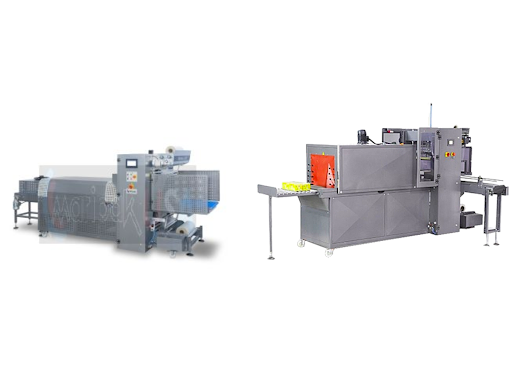
Modern shrink wrap packaging equipment ranges from simple manual sealers for low-volume operations to fully automated, high-speed production lines capable of wrapping thousands of units per hour. Semi-automatic L-bar sealers paired with conveyor-fed shrink tunnels represent the sweet spot for medium-volume operations, delivering consistent quality and respectable throughput without the capital investment required for full automation.
For high-volume operations requiring continuous, unattended production runs, fully automatic side-seal systems and sleeve wrappers offer the speed and consistency needed to meet demanding output targets across multiple shifts.
Final Verdict
Shrink wrap packaging remains one of the most efficient and visually effective product protection methods available to manufacturers and packagers at every scale. For businesses that need to bundle multiple products together at high speed for retail multipacks, promotional sets, or distribution-ready pallets, investing in a purpose-built shrink bundler delivers the automated bundling capability that takes packaging throughput and consistency to the next level.





Most Commented Posts