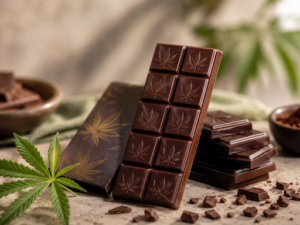
Chocolate is a familiar food, but adding cannabinoids to confectionery creates a product that consumers need to approach differently from ordinary chocolate. The ingredients, cannabinoid concentration, serving size, labeling, and expected effects can all influence the experience. Unlike inhaled cannabis, edible products are processed through the digestive system, which means their effects may take longer to appear and can last considerably longer.
An infused chocolate bar combines chocolate with one or more added compounds, which may include cannabinoids such as THC. Understanding what is actually contained in the product is important because edible cannabis can have delayed and unpredictable effects. The Centers for Disease Control and Prevention notes that edible products can take 30 minutes to two hours to produce intoxicating effects and may last longer than consumers expect.
What Is an Infused Chocolate Bar?
An infused chocolate bar is a chocolate-based edible containing an added active ingredient. In cannabis-related products, that ingredient may be THC, CBD, or another cannabinoid.
Products can differ substantially in formulation. Some are divided into individual pieces or portions, while others are sold as a single bar with a specified total cannabinoid amount. The packaging should clearly identify the serving size and cannabinoid concentration where required.
Consumers should distinguish between the amount contained in the entire package and the amount contained in one serving. Confusing these figures can result in unintentionally consuming more of the active ingredient than intended.
How Do Chocolate Edibles Differ From Inhaled Cannabis?
The most significant difference is the way the body processes the product. Inhaled cannabis enters the bloodstream through the lungs, whereas edible products pass through the digestive system.
As a result, the effects of an infused chocolate bar may take considerably longer to become noticeable. According to the CDC, edible cannabis can take between 30 minutes and two hours to produce intoxicating effects. The timing can vary according to factors such as metabolism, food intake, the amount consumed, and individual biology.
This delayed onset is important because consuming additional amounts before the first serving takes effect can increase the likelihood of experiencing stronger or longer-lasting effects than expected.
Why Does THC Concentration Matter?
THC is psychoactive, meaning it can affect perception, coordination, judgment, and reaction time. The concentration in an edible therefore matters considerably.
Consumers should check both the THC amount per serving and the total THC amount in the package. A larger chocolate bar may contain several servings, so eating the entire product may represent substantially more THC than consuming one labeled serving.
The CDC also cautions that THC concentrations in edible products can sometimes be difficult to measure accurately and may not always correspond precisely with labeling.
For this reason, transparent labeling and reliable product information are important considerations when evaluating an infused chocolate bar.
What Ingredients Should You Check?
Cannabinoids are only one part of a chocolate product’s ingredient profile. Consumers should examine the complete ingredient list for common allergens and dietary considerations.
Depending on the formulation, chocolate may contain milk, soy, nuts, cocoa, sugar, emulsifiers, flavorings, or other ingredients. People with food allergies should review the allergen statement before consuming the product.
It is also worth checking whether the product provides information about cannabinoid testing, manufacturing, serving size, and storage. Products with unclear labeling make it more difficult to determine exactly what is being consumed.
Are All Infused Chocolate Products the Same?
No. Products can differ in cannabinoid type, concentration, serving size, ingredients, formulation, and legal status.
Some products may contain delta-9 THC, while others may contain different cannabinoids. The source and concentration of cannabinoids can also affect how a product is regulated.
The legal framework surrounding cannabis and cannabinoid-containing foods varies by jurisdiction. The FDA currently states that adding THC or CBD to food for interstate commerce is prohibited under the Federal Food, Drug, and Cosmetic Act, subject to the law’s exceptions.
State laws may establish additional requirements or restrictions, so consumers should check the rules applicable to their location.
How Should Infused Chocolate Be Stored?
Storage is particularly important because chocolate resembles ordinary food. Children or other household members may not realize that a product contains an intoxicating substance.
The CDC recommends keeping cannabis products in locked, childproof containers and away from children and pets.
Keeping an infused chocolate bar in its original packaging also helps preserve important information about ingredients, serving size, cannabinoid content, and warnings.
Consumers should avoid leaving infused products in locations where they could easily be mistaken for conventional snacks.
What Are the Potential Risks of Edible THC?
The effects of THC can include impaired coordination, altered perception, reduced reaction time, and impaired decision-making. These effects can make activities such as driving particularly dangerous.
The CDC advises against driving after cannabis use because cannabis can slow reaction time, impair coordination, and affect decision-making. Combining cannabis with alcohol can further increase impairment.
Overconsumption is another concern. Because edible effects are delayed, consumers may take additional amounts before the initial serving has fully taken effect.
If someone develops severe symptoms after consuming an edible, medical assistance or poison-control guidance should be sought promptly.
Why Is Product Packaging Important?
Packaging serves more than an aesthetic purpose. It should communicate what the product contains and provide information that helps consumers distinguish it from ordinary food.
The FDA has warned about THC-containing foods that resemble conventional snacks and noted that accidental ingestion can cause serious adverse events, particularly among children.
This is especially relevant for chocolate products because their familiar appearance can make them easy to confuse with conventional confectionery.
What Should Consumers Look for Before Buying?
Before selecting an infused chocolate bar, consumers should review the cannabinoid content, serving information, ingredient list, allergen statement, manufacturer details, testing information where available, storage instructions, and applicable legal requirements.
It is also important to consider whether the product’s packaging clearly separates individual servings. Clearly divided portions can make it easier to understand the amount being consumed.
Consumers should be particularly cautious about products making broad health claims or providing incomplete information about their active ingredients.
Conclusion
An infused chocolate bar combines a familiar food format with ingredients that can produce significant effects, making product information and responsible storage particularly important. Consumers should understand the difference between serving size and total package content, recognize that edible effects can be delayed, and avoid assuming that every cannabinoid product has the same strength or legal status. When comparing products such as a THC cereal bar, consumers should pay attention to clear labeling, cannabinoid concentration, ingredients, testing information, and packaging rather than relying solely on appearance or marketing language.







Most Commented Posts